Masterclass in Pitching Ads "Master Ticket"
Masterclass in Pitching Ads
"Master Ticket" Amvuttra
Director
Magellan Rubin
Year
2024
Director
Magellan Rubin
Year
2024
Type
Pitch
Industry
Pharma
How to pitch an ambitious ad campaign
Pitching a great pharma ad is not about making disease look glamorous. It is about making the audience feel seen, making the science easy to trust, and making the treatment feel like a meaningful step toward a better life.
What makes this pitch strong
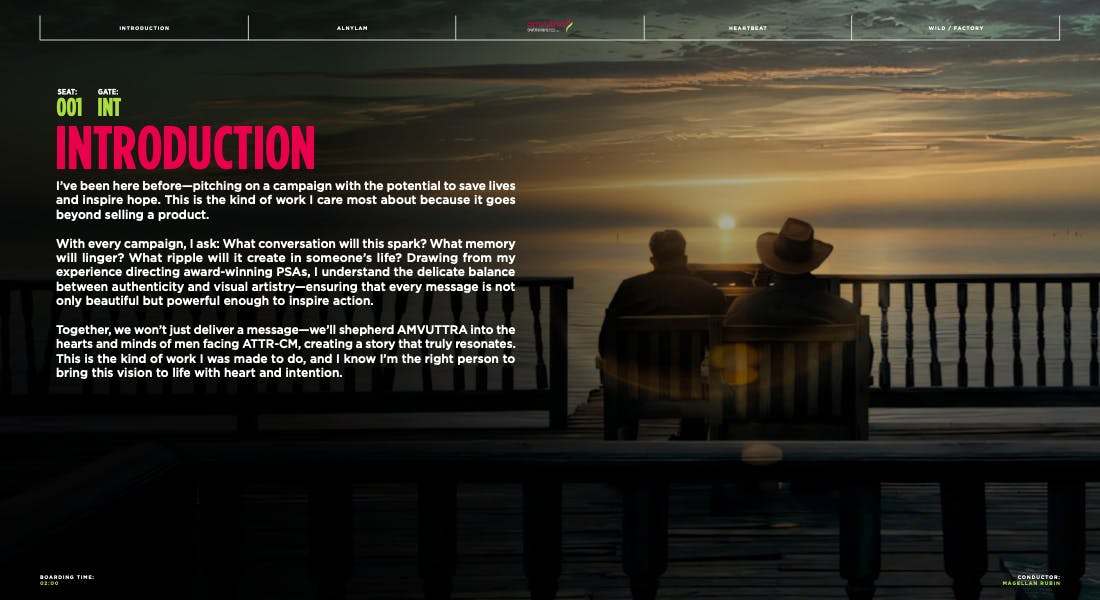
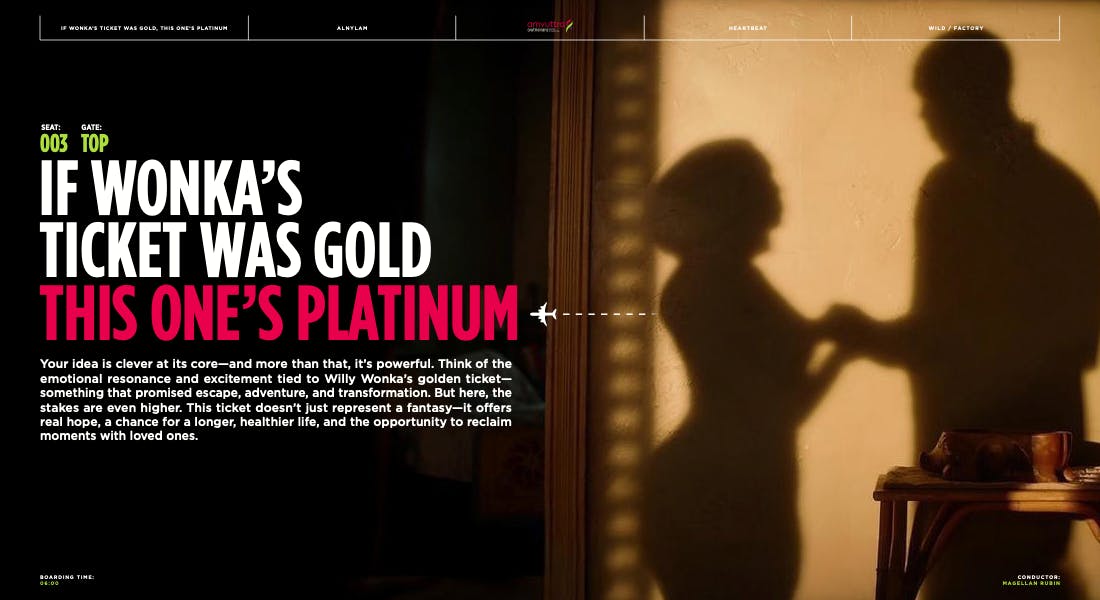
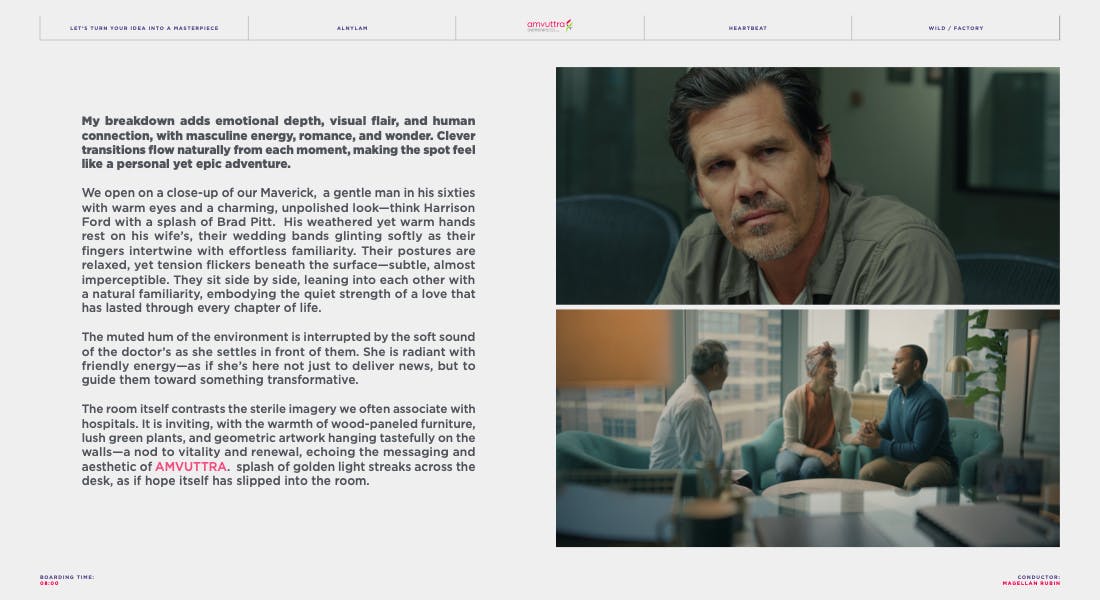
The “Master Ticket” concept for Amvuttra works because it does three hard things at once: it reimagines a pharma message as a cinematic story, it respects the emotional reality of older adults facing ATTR-CM, and it gives the brand a visual metaphor that is memorable without feeling gimmicky. The gold-plated “ticket” idea borrows the emotional promise of a Wonka-style reveal while translating it into something more grounded: hope, mobility, and more time with the people and experiences that matter.
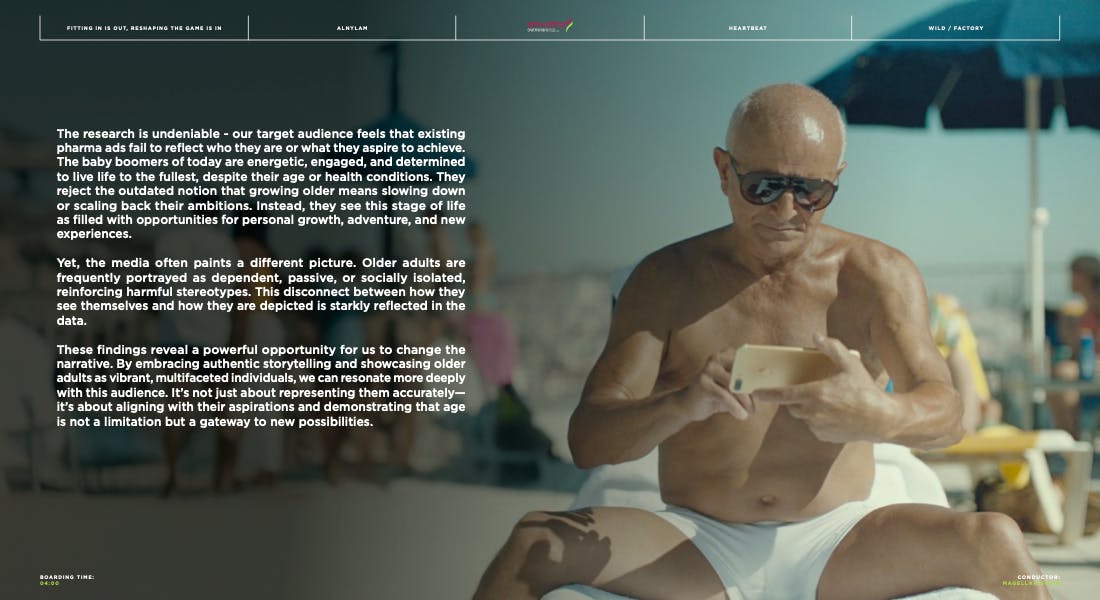
What makes the pitch persuasive is that it refuses the usual pharma trap of portraying older adults as passive patients. Instead, it positions them as active, adventurous, and still hungry for life, which is exactly the audience tension the deck says the market research uncovered.


The pitch structure
A strong pharma pitch should move in a clear sequence:
Start with the human problem, not the molecule.
Name the emotional white space in the category.
Introduce the brand promise in plain language.
Show how the creative device makes the message sticky.
Explain how the execution stays compliant, clear, and premium.
This deck does that well. It begins with empathy and ambition, then builds toward a visual system built around the “ticket” as a narrative engine that can carry the audience through different fantasies of a fuller life.
Why the concept works
“Master Ticket” succeeds because it frames treatment as access rather than limitation. That is a smart strategic move in pharma, where the best creative often focuses on what life can still feel like, not on what the disease has taken away.
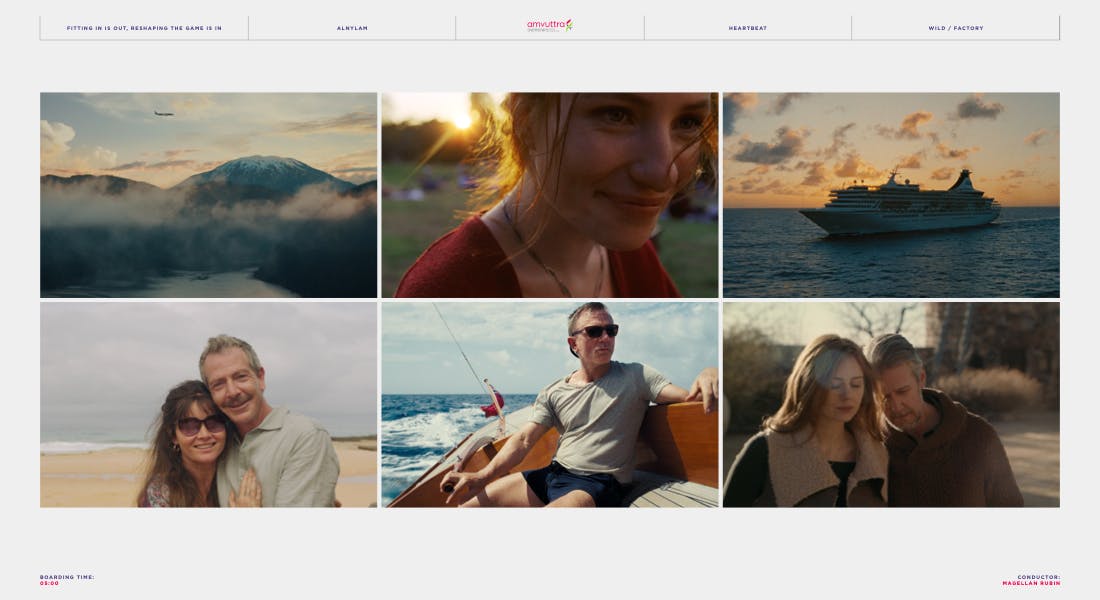
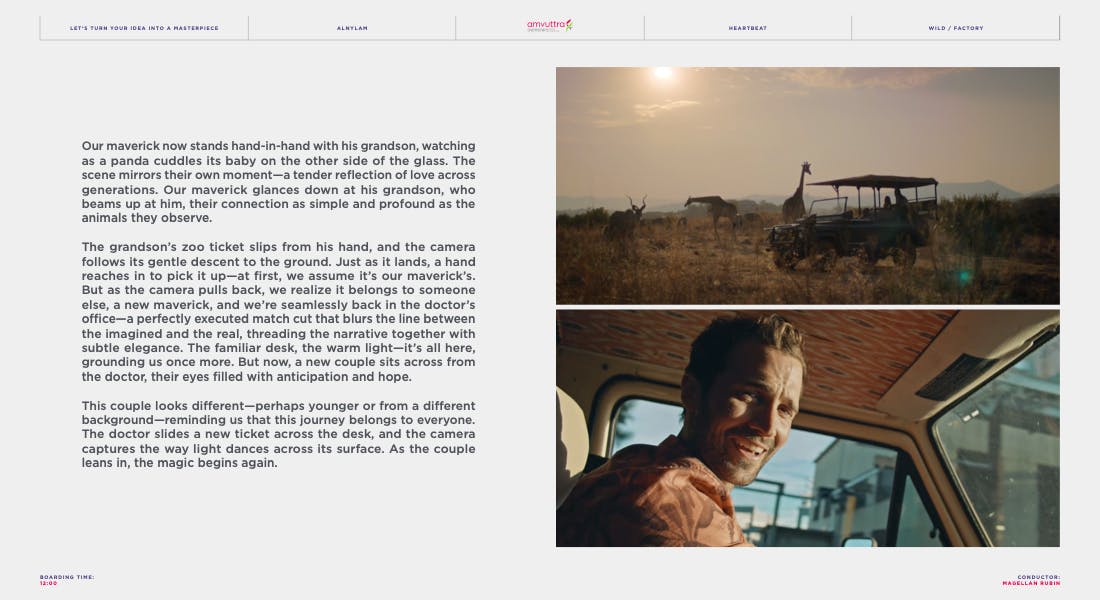
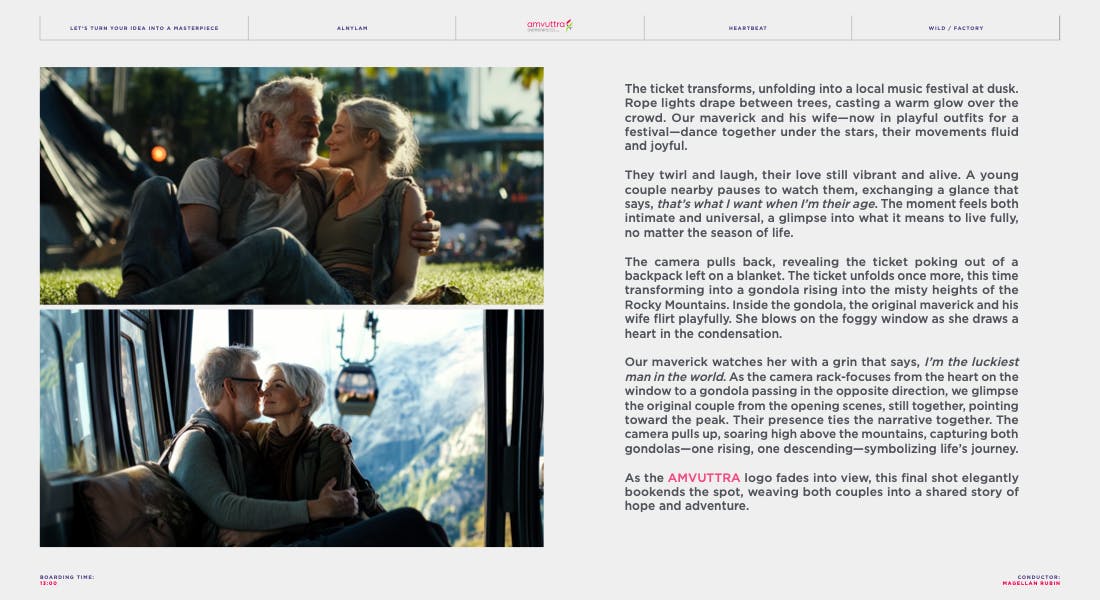
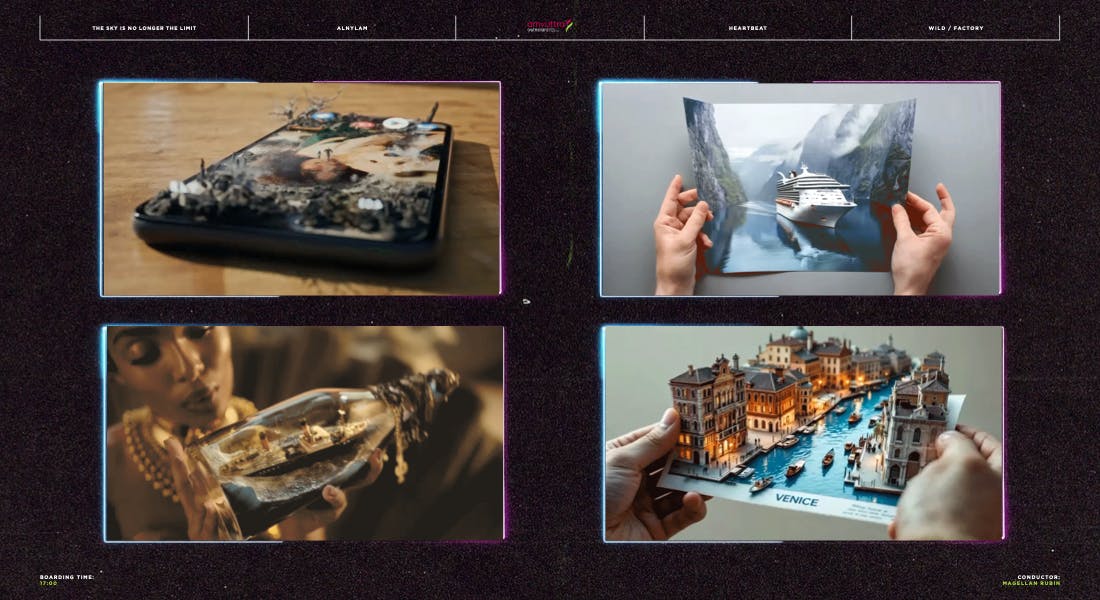
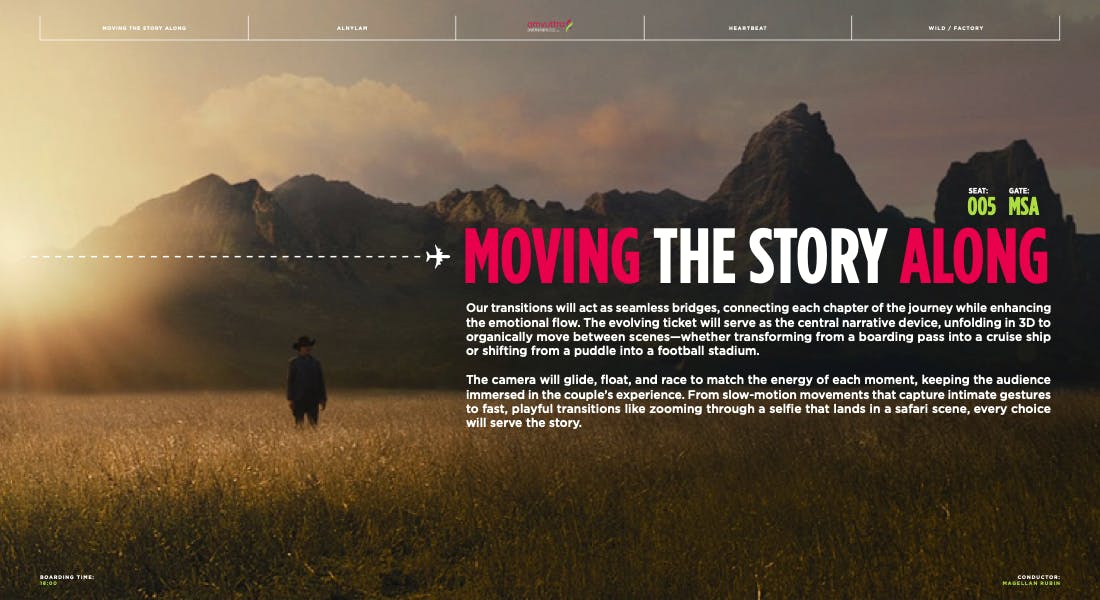
The ticket motif also gives the campaign a flexible storytelling device. It can open the door to cruises, stadiums, safaris, festivals, and mountain adventures while keeping one emotional throughline intact: the patient is not stepping out of life, but deeper into it. That is a strong pitch principle because it gives the brand room to build a broader campaign system, not just one spot.

Why Magellan matters
The director’s voice is a major part of why this pitch feels premium. Magellan’s language emphasizes lived-in authenticity, visual artistry, and emotional restraint, which is exactly what a pharma campaign needs when it wants to be aspirational without becoming fake.
A weak pharma pitch often over-explains the concept or over-styles the disease. Here, the pitch leans on performance, subtle transitions, and cinematic control to let the audience feel the transformation rather than be lectured about it. That balance is especially important in regulated healthcare advertising, where trust is everything.
What Wild / Factory is selling
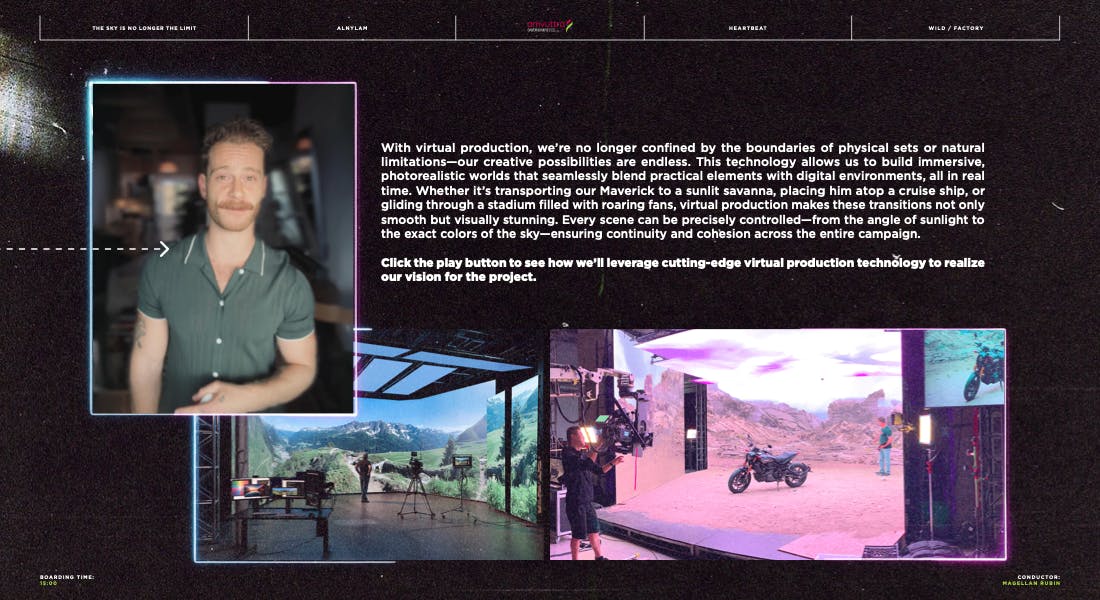
Wild / Factory is not just pitching a commercial; it is pitching a full creative production system. The deck shows the company can handle concept development, visual design, performance direction, virtual production, sound, modular editing, and flexible deliverables for TV, CTV, and digital.
That matters to pharma clients because the category demands precision. A production partner must be able to make a spot feel emotionally rich while still staying within a framework of claims, approvals, and audience sensitivity. Wild / Factory’s pitch demonstrates they understand that the executional details are not secondary they are the product.
Performance and emotional strategy
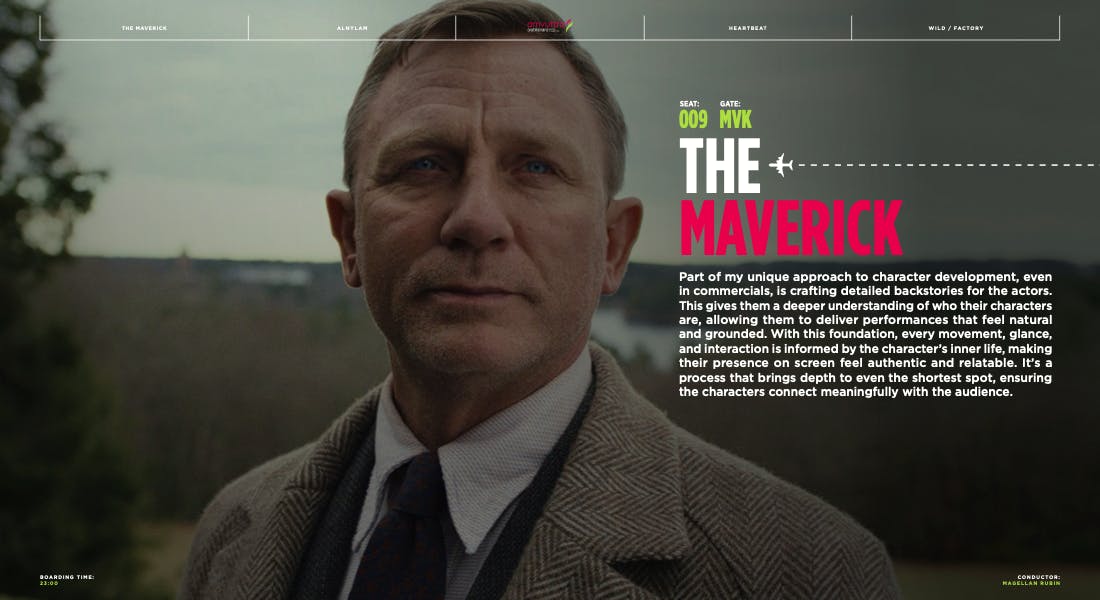
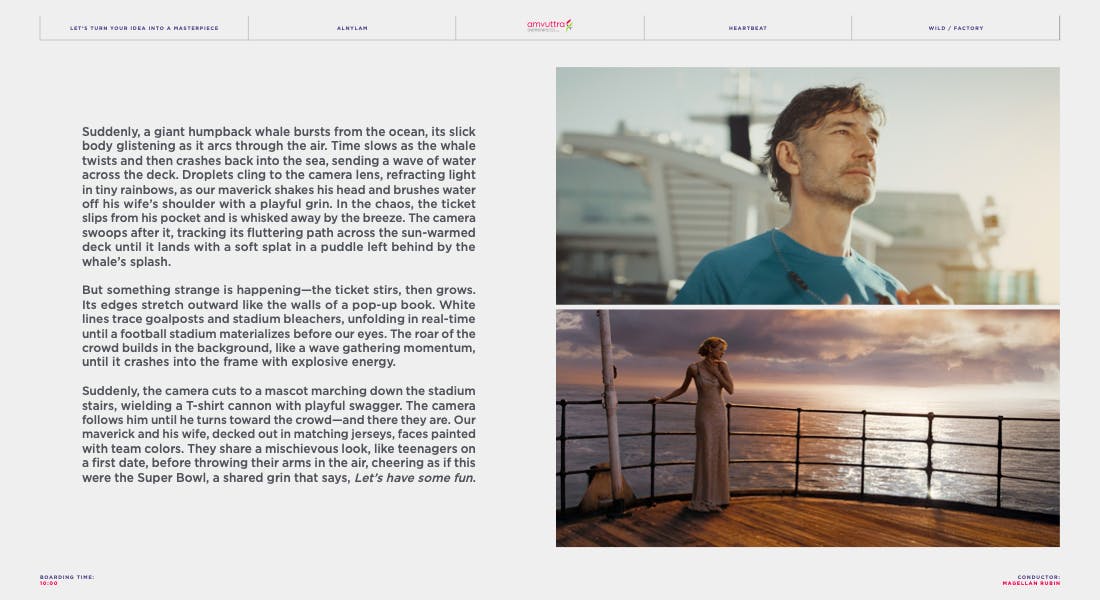
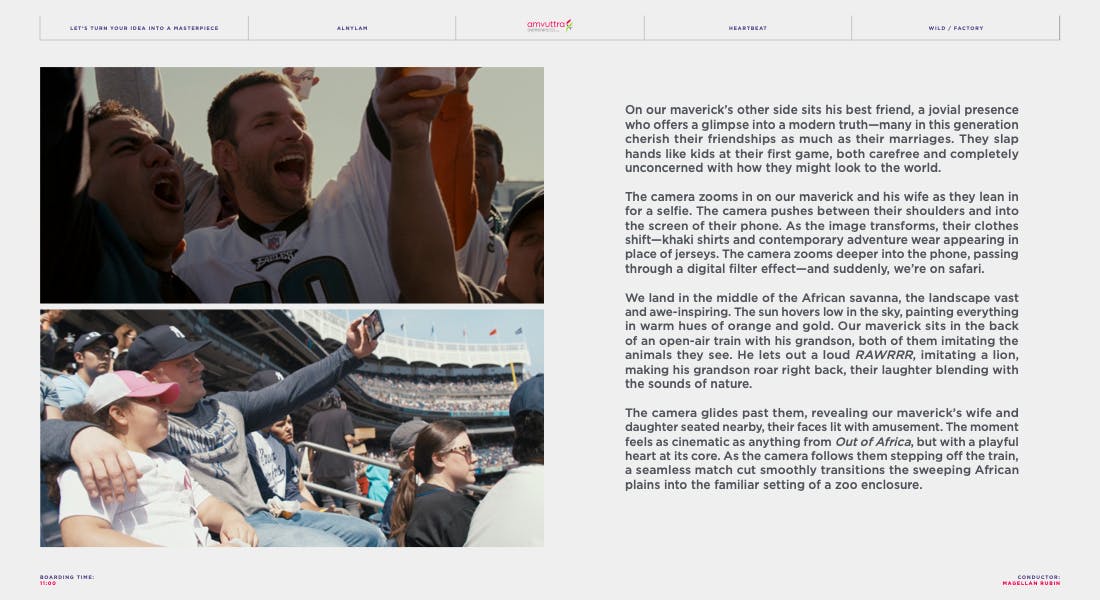
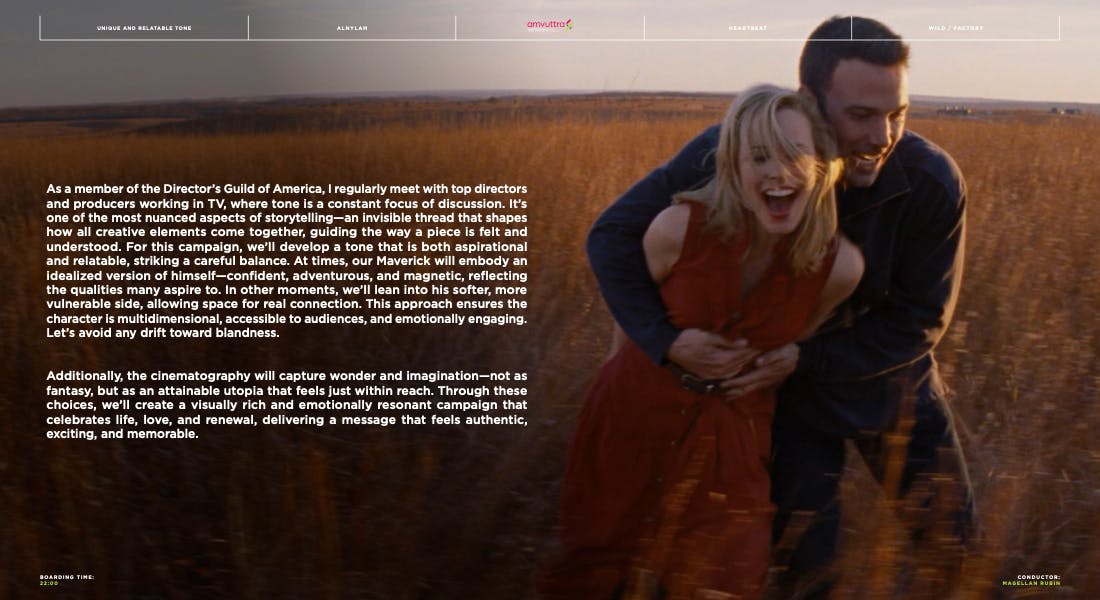
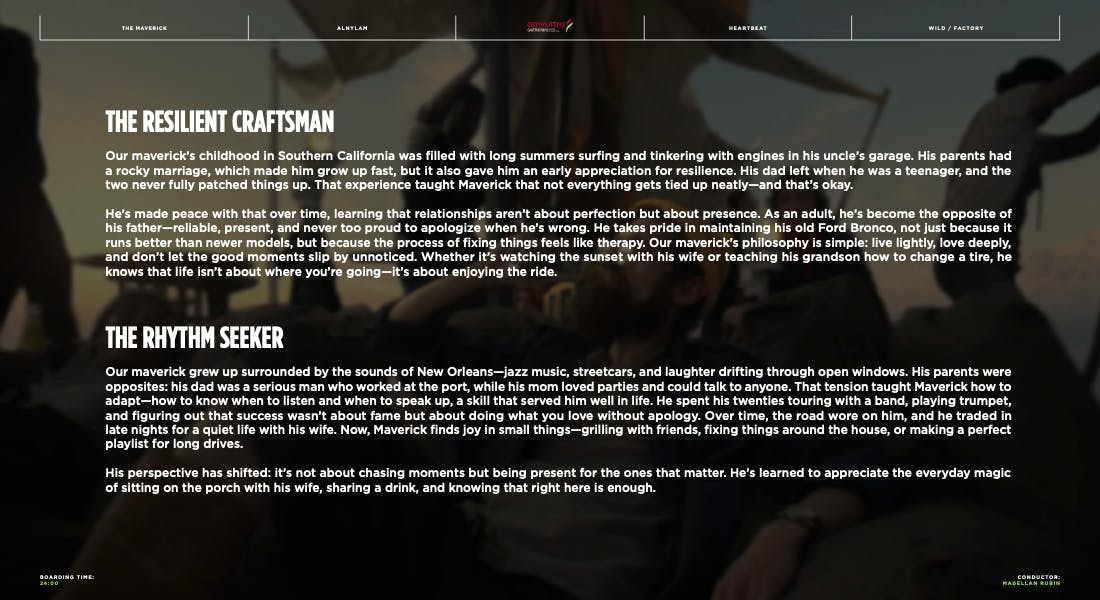
The pitch is strongest when it treats performance as the heart of the campaign. The Maverick is not a generic patient avatar; he is written as a recognizable man with history, taste, tenderness, and a desire to keep living fully. That level of character work gives the audience something to connect to before they ever process the medical relevance.
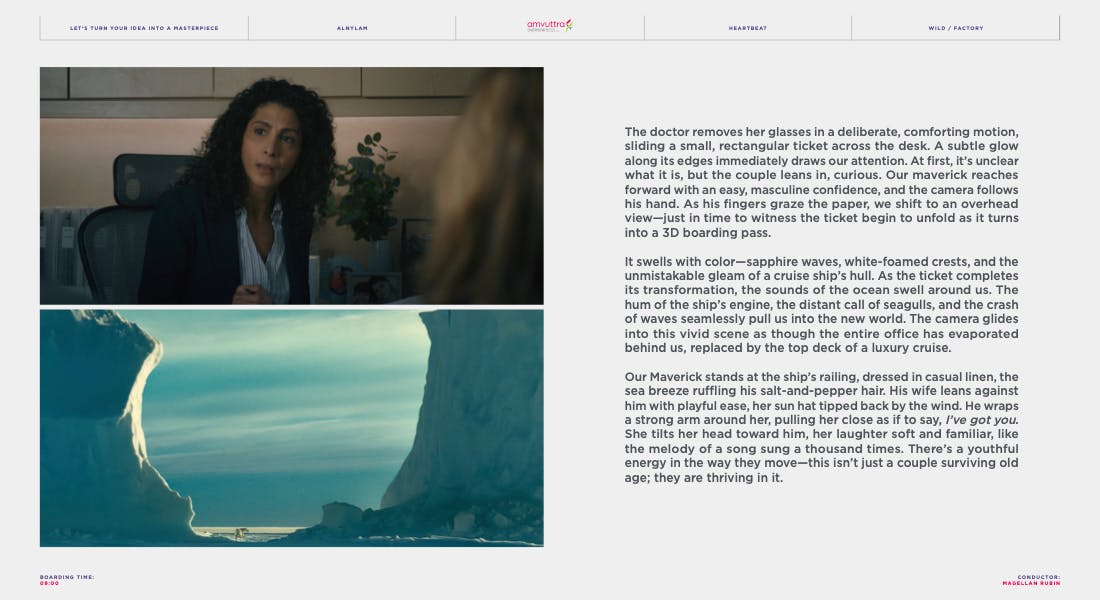
The concept also smartly uses contrasts: doctor’s office versus cruise deck, football stadium, safari, festival, and mountain escape. Those transitions make the campaign feel imaginative, but they also reinforce a basic therapeutic idea: better treatment can mean a broader, more active life.
Key pitch lessons for pharma
This is the part other pharma teams can steal:
Lead with aspiration, not pathology.
The campaign is about possibility, not just disease management.Build around a single, repeatable metaphor.
The ticket gives the campaign a clean organizing device and a memorable visual hook.Write the patient as a person.
The “Maverick” backstory makes him feel dimensional and real.Make the creative system modular.
The deck’s treatment video, hero film, and alternate scenes suggest a campaign that can live across formats.Keep the tone elevated but human.
The goal is not fantasy for fantasy’s sake; it is emotional truth with cinematic polish.



How to pitch this internally
If you were presenting this to a pharma client, the strongest framing would be:
This is a campaign about reclaiming life, not simply treating disease.
The ticket is not a gimmick; it is the visual language of access, hope, and momentum.
The director brings a performance-first sensibility that will protect authenticity.
The production company can execute a complex, multi-environment vision without losing clarity or compliance.
The result will stand out in a category that too often looks and sounds the same.
Why it stands out
Most pharma campaigns try to win by sounding safe. This one tries to win by being emotionally precise. It understands that the audience does not want to be pitied; they want to be understood, respected, and shown a future worth moving toward.
That is the real master class here: not just a clever metaphor, but a pitch that turns medical necessity into narrative momentum.


When selecting directors for pharma advertising, the best choice is usually the one who can balance three things at once: emotional truth, regulatory discipline, and production control. A director like Magellan is valuable not just because of style, but because they can turn a medically complex brief into a clear, human story that survives legal review and still feels cinematic.
What to prioritize
Start by judging whether the director can handle the category’s core tension: pharma needs to be compelling and compliant. The strongest candidates know how to humanize the message, integrate risk information cleanly, and keep the audience focused on patient experience rather than product jargon.
Look for these qualities first:
Patient empathy without sentimentality.
A strong visual point of view that can elevate a mundane setting into something memorable.
Comfort working with legal, medical, and regulatory stakeholders early and often.
Performance skills, especially if the spot depends on nuanced acting rather than exposition.
Ask for evidence, not just reels
A polished reel is not enough in pharma. You want proof that the director has already made choices under real-world constraints ISI, fair balance, medical accuracy, multiple approval rounds, and tight media formats.
Ask them to show:
A pharma or healthcare campaign they led from concept through delivery.
How they handled compliance notes without flattening the creative.
How they worked with actors to get truthful performances in a constrained runtime.
How they adapted a concept for TV, CTV, digital, and HCP or patient audiences.
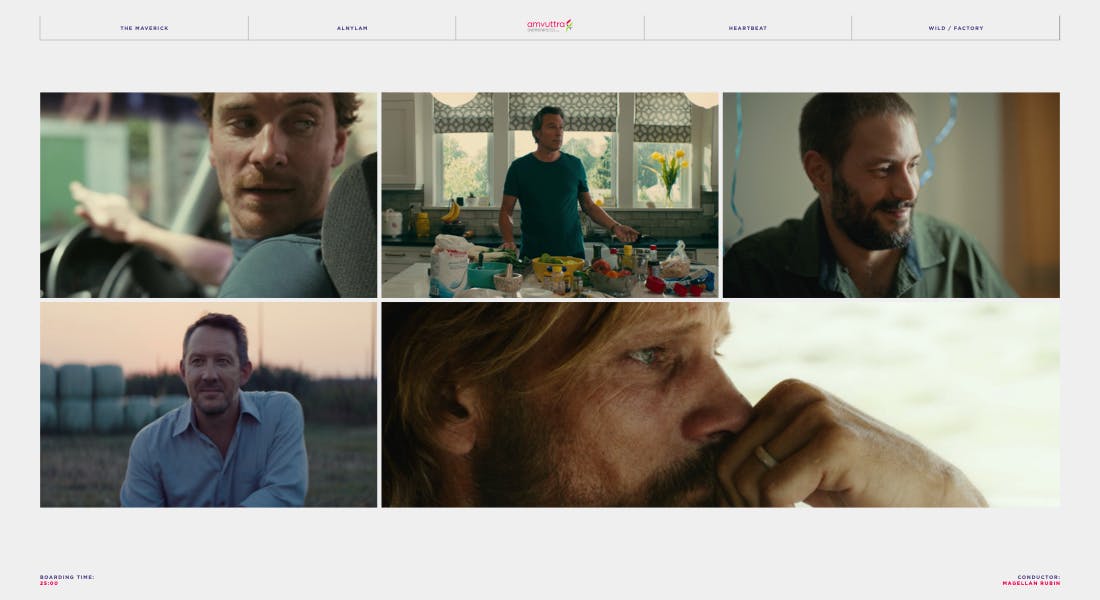
Why Magellan-style directors stand out
Directors in Magellan’s lane tend to bring a feature-level sensibility to commercials: they care about backstory, rhythm, emotional arc, and world-building. That matters in pharma because a good treatment is often the difference between a sterile disease ad and a story patients actually recognize themselves in.
They also tend to understand that the product is never just a product. It is a promise about time, mobility, dignity, or relief, and the director has to translate that promise into scenes that feel grounded enough for trust and elevated enough for recall.
The biggest selection mistakes
The most common mistake is choosing a director for aesthetic taste alone. A beautiful spot that fails compliance or sounds tone-deaf to patients is a failed spot.
Other pitfalls include:
Hiring someone who is great at consumer work but weak in medical storytelling.
Selecting a director who over-stylizes illness and makes it feel inauthentic.
Ignoring whether they can work productively with legal and medical reviewers.
Underestimating how much performance direction matters when the message must feel human, not promotional.
The best signal of fit
The strongest signal is whether the director can explain the campaign back to you in plain language. If they can articulate the patient insight, the emotional payoff, and the compliance boundaries clearly, they probably understand the assignment. If they only talk about “tone” and “look,” they may be more interested in the reel than the result.

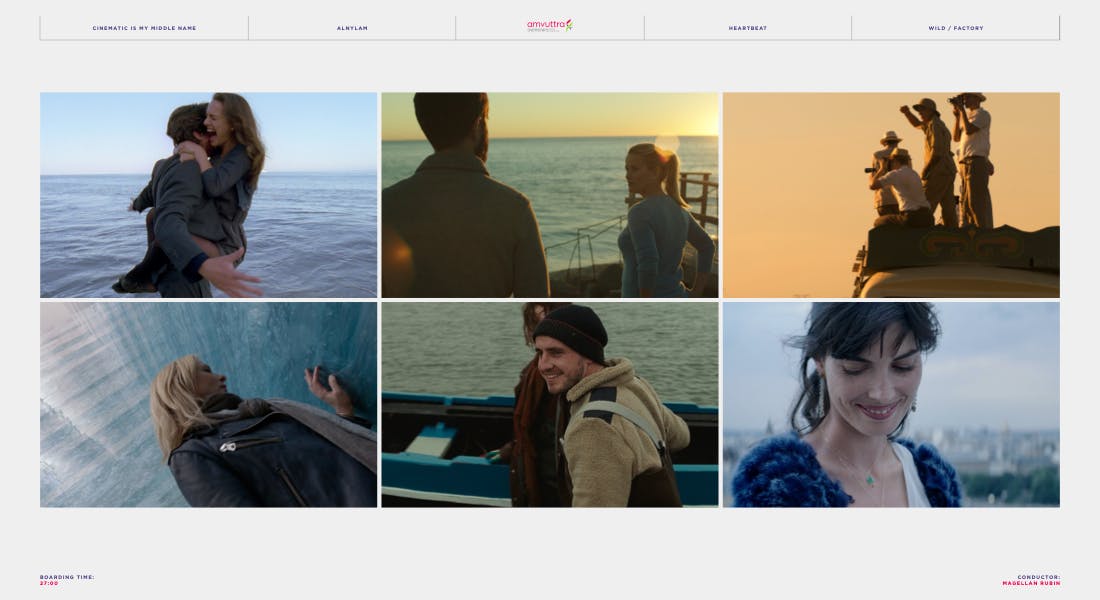
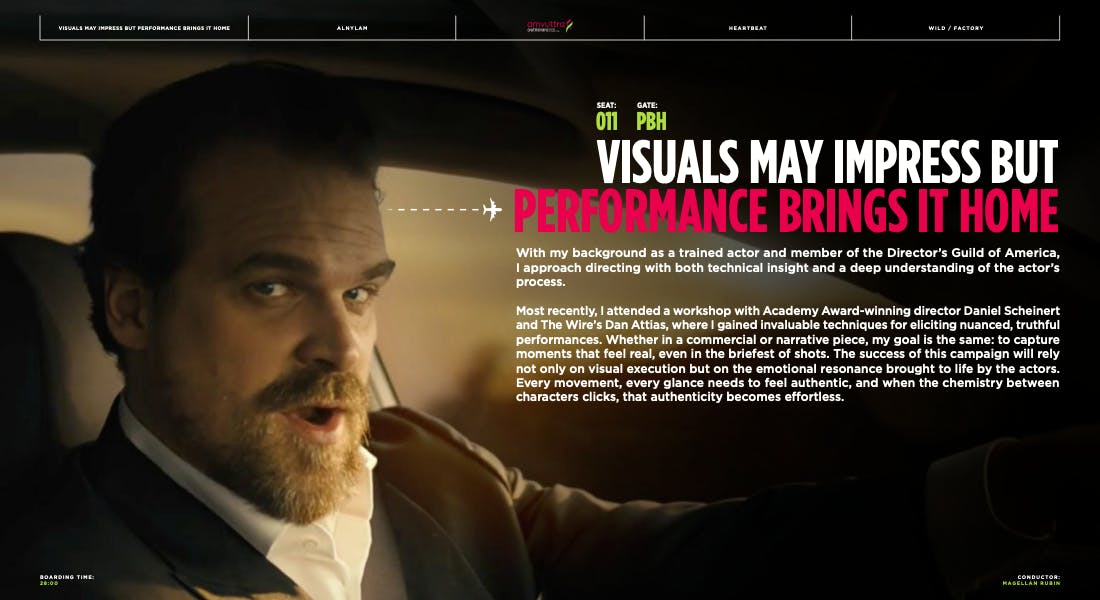
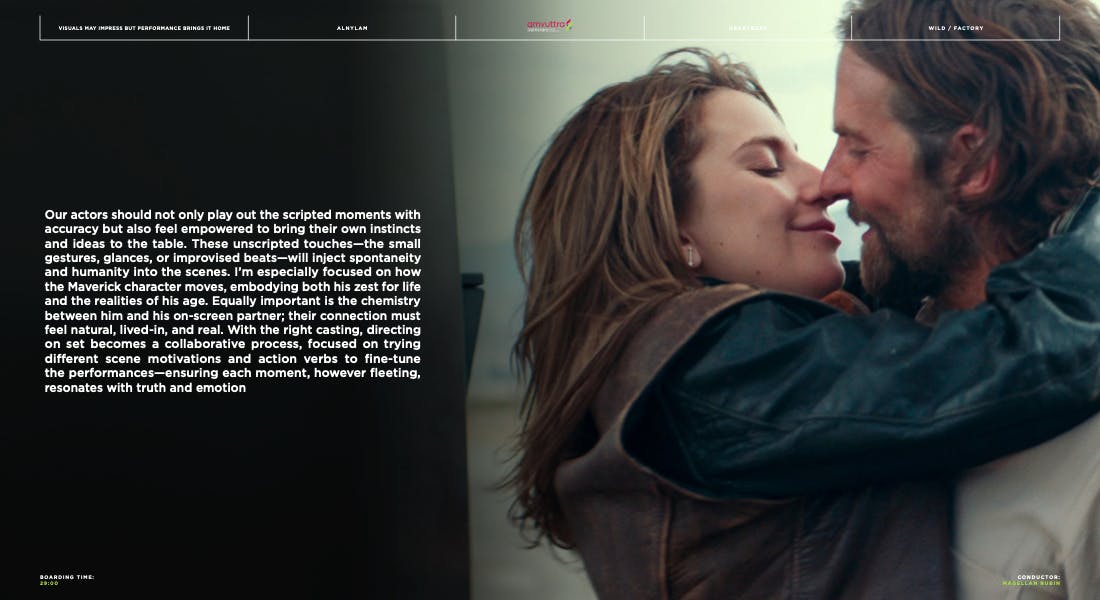

The most important thing to know is that pitching ideas is not really about showing a client how creative you are it’s about showing them that you understand their problem better than anyone else and have a clear, compelling way to solve it. The best pitches make the client feel seen, confident, and excited.
Start with the problem
A strong pitch begins with the client’s business challenge, not your favorite idea. If you open with visuals before you’ve framed the issue, the work can feel disconnected from what the client actually needs. The first job is to prove you understand the market, the audience, the pressure, and the opportunity.
Make the client the hero
Clients are not buying a clever deck; they are buying a solution that makes them look smart, safe, and successful. Your story should position their brand as the star and your idea as the bridge between where they are and where they want to go. The pitch should feel like momentum toward their win, not your performance.
Lead with one sharp insight
The strongest pitches usually rest on one simple insight that feels obvious once it’s said out loud. That insight should be specific to the client, specific to the audience, and specific to the category. If you have three insights, you probably don’t have one strong enough insight yet.
Keep the idea easy to repeat
A client should be able to explain your idea to someone else in one sentence. If the pitch is too layered, too abstract, or too dependent on the deck, it will be hard to champion internally. The best ideas are simple enough to remember, but rich enough to grow into campaign worlds.
Show how it works in the real world
A great pitch is not just an idea, it’s a plan. Show where the idea lives, how it scales, what formats it works in, and how it could evolve over time. Clients want to know the work can survive real budgets, real timelines, and real channels.
Balance craft and practicality
Creative ambition matters, but so does feasibility. A pitch loses power if it feels impossible to produce, too expensive, or too risky for the brand’s reality. The best creative directors know how to make the work feel ambitious without making it feel unmanageable.
Bring the right people
The room matters almost as much as the idea. Clients are always reading the team: who leads, who listens, who knows the business, who can answer hard questions, and who feels like a long-term partner. Pitching is as much about trust and chemistry as it is about concept.
Anticipate objections
A good pitch already answers the questions the client is about to ask. Why this idea? Why now? Why us? Why will this work in market? If you handle those concerns proactively, the client feels understood instead of sold to.
Speak their language
Every client has its own vocabulary, and smart pitch teams adapt to it. A brand-side CMO may want business outcomes, while a marketing lead may care more about audience resonance and execution. The more fluent you are in their priorities, the stronger your pitch lands.
Don’t over-explain
If you have to keep explaining the idea, the idea may not be strong enough. Leave room for the client to feel the concept, not just decode it. The best presentations create a clear emotional reaction and then back it up with strategy.
End with confidence
The close should make the client feel they can move forward with you safely and enthusiastically. Summarize the opportunity, restate the value, and make the next step feel obvious. A pitch should leave them thinking not just “that was good,” but “this is the team that gets us.”
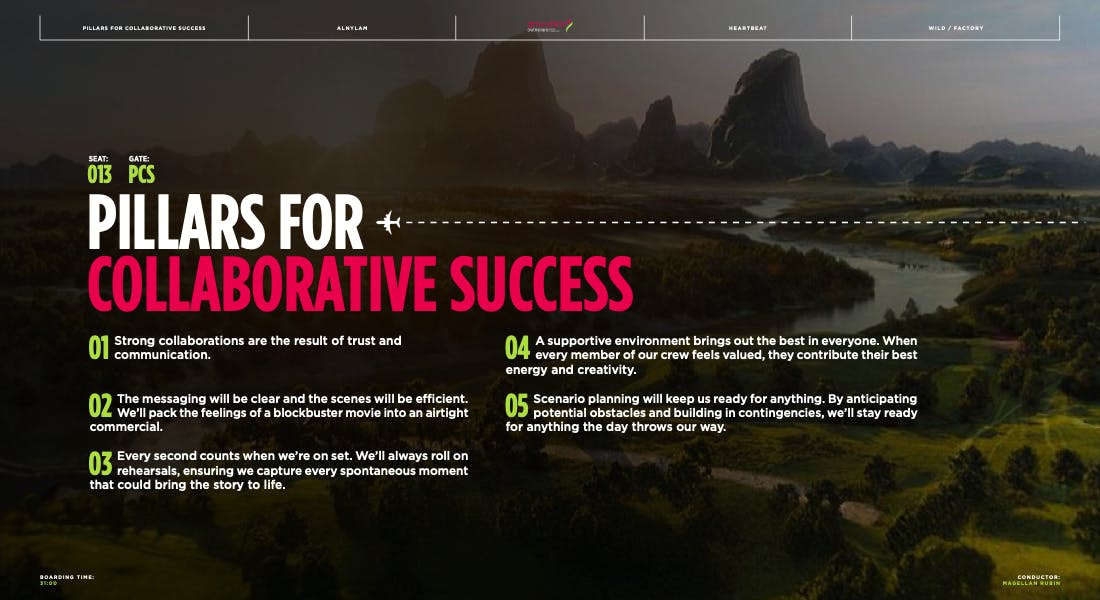
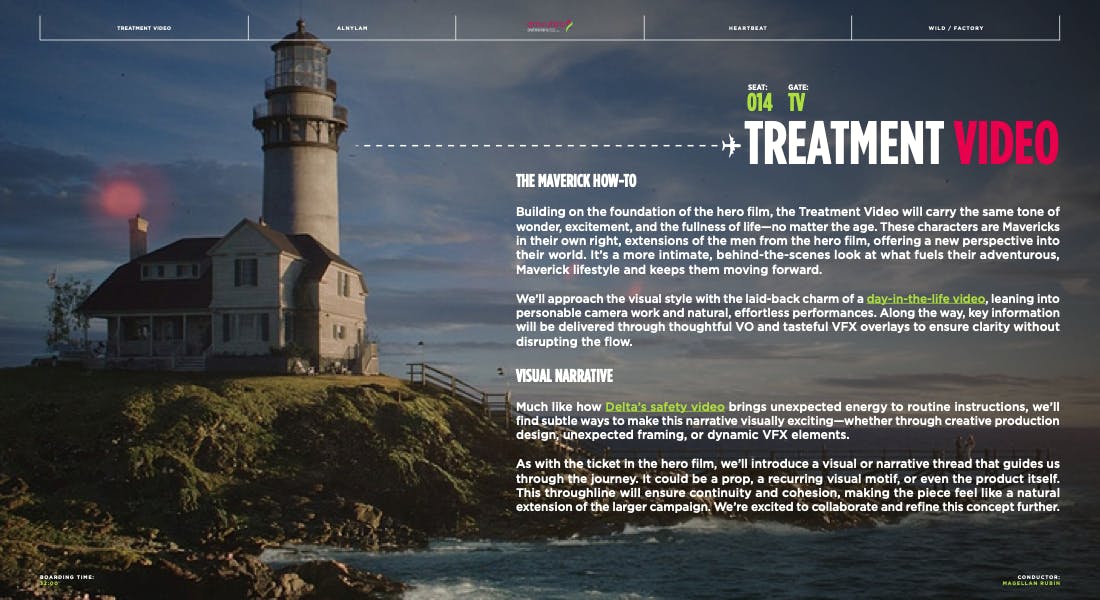

Agencies usually shortlist directors on a mix of fit, proof, and chemistry. The director has to match the brief creatively, show relevant past work, and feel easy to collaborate with under pressure.
What agencies look for
The most common criteria are:
Relevance to the brief. Does the director’s reel show they can handle this exact kind of story, tone, and format?
Experience at the right scale. Big campaigns often call for directors who have already handled complex commercial shoots, celebrity talent, or heavy post/VFX.
A strong treatment. Agencies want a clear point of view, not just pretty references. The treatment has to show how the idea becomes a film.
Chemistry. Teams often choose the person they feel they can trust and work with easily over many rounds of feedback.
Production support. A director backed by a production company with a good reputation can feel less risky, especially for newer talent.
How shortlists are built
A common agency pattern is to start with three director options: two obvious choices and one wildcard. That gives the team both safety and creative range. Some agencies use a more formal review process, comparing budget, timing, and treatment strength before meeting shortlisted directors.
What gets a director cut
Directors often get removed from the shortlist when:
Their reel looks good but doesn’t solve the actual problem.
They seem too risky for the budget or schedule.
Their style feels repetitive or off-brand.
They don’t show enough flexibility for client notes and approval rounds.
The strongest signals
The best sign is when a director can explain the campaign back in plain language and show exactly how they will make it feel distinctive. Agencies are not just buying visuals; they are buying confidence that the director can turn a brief into a finished ad without surprises.