7 Brand Storytelling Video Techniques That Actually Convert
7 Brand Storytelling Video Techniques That Actually Convert
Master the Art of Emotional Connection
Director
Wild / Factory
Year
2026
Director
Wild / Factory
Year
2026
Type
How-to Guide
Industry
Advertising

A List of Time-tested Storytelling Techniques in Commercial Filmmaking
There is a persistent fantasy in marketing departments that conversion is a technical problem. Get the targeting right, nail the call to action, optimize the funnel, A/B test the thumbnail — and the numbers will follow. This fantasy is partly true and almost entirely incomplete.
The brands that consistently convert at the highest rates aren't winning because their media plans are slightly better calibrated than everyone else's. They're winning because their stories are landing. Because their video content is doing something that no amount of retargeting pixel precision can replicate: making an audience feel something before they're asked to do something.
Brand storytelling video is the discipline that closes the gap between reach and response, between impressions and intent, between an audience that saw your content and an audience that acted on it. It is the reason a startup eSIM company can generate 20 million organic views on YouTube in a single month. It is the reason a mental health platform can help five million people worldwide. It is the reason a crypto exchange can earn 356,000 new YouTube followers from a single campaign.
This guide breaks down the seven core storytelling techniques behind those results — the narrative frameworks, visual strategies, and audience targeting approaches that separate brand video that actually converts from brand video that merely exists. Each technique is illustrated with real campaigns from Wild / Factory, a New York and Los Angeles-based project-based creative agency and video production company whose portfolio spans AirAlo, Bonobos, Blockchain.com, BetterHelp, Douglas Elliman, and dozens more. Together, they form a practical playbook for any brand that wants to move beyond transactional content into the kind of storytelling that builds lasting equity.

Why Brand Storytelling Converts When Advertising Doesn't
Before the seven techniques, a foundational question: why does storytelling outperform advertising in driving genuine conversion? The answer lives in neuroscience before it lives in marketing strategy.
When a human brain encounters a story — a character facing a tension, navigating a choice, reaching a resolution — it does something remarkable: it synchronizes with the narrative. Neural coupling, the phenomenon where a listener's brain activity mirrors a storyteller's, means that a compelling story literally changes the listener's brain state. Cortisol rises during conflict. Oxytocin releases during moments of human connection. Dopamine fires at narrative resolution. The audience doesn't just observe the story; they inhabit it.
Advertising that interrupts — that arrives as a message to be processed rather than a story to be experienced — activates none of these mechanisms. It is encountered by a brain that is evaluating it for whether to engage or skip, whether to believe or dismiss. The evaluation posture is the enemy of conversion, because evaluation keeps the audience at a cognitive distance from the brand's message.
Storytelling bypasses evaluation. An audience that is inside a story — that has accepted its premise, cares about its character, is feeling its tension — is in a fundamentally different relationship with the brand doing the telling. Their defenses are down not because they've been tricked but because they've been invited into an experience that feels worth having.
This is the conversion mechanism that brand storytelling video activates. And the seven techniques that follow are the specific ways the best practitioners in the field reliably create that experience.

Technique 1: The Tension-First Narrative Framework
The principle: Open with the audience's pain, not the brand's solution.
The most common structural mistake in brand video is what could be called the "solution-first" error: the brand appears in the first five seconds, the product's existence is established in the first fifteen, and the creative spends the remaining time explaining why the solution is excellent. The audience, having received a sales pitch they didn't ask for, engages their evaluation posture and begins considering whether to skip.
The tension-first framework inverts this structure entirely. It opens with the audience's pain — the specific, human, emotionally resonant frustration, fear, aspiration, or desire that the brand exists to address — and holds that tension long enough for the audience to recognize themselves in it before any solution is offered.
The neurological logic is sound: an audience that has recognized their own experience in the story's opening tension is already emotionally invested before the brand appears. When the solution arrives, it arrives not as a sales claim to be evaluated but as a narrative resolution to be felt. The brand earns the conversion by first earning the emotional investment.
How Wild / Factory executes it:
The AirAlo "Bill Shock" campaign, directed by Johan T Anderson, is a masterclass in tension-first narrative construction. AirAlo is an eSIM provider — a technically abstract product in a low-awareness category. A solution-first approach would have opened with eSIM education. Instead, the campaign opens with a tension that every international traveler has felt viscerally and personally: the dread of coming home to a phone bill that has been silently accumulating roaming charges while you were sunbathing by the pool.
That tension is not mentioned in the script. It is embodied as a character — Ken Jeong's "Bill Shock," a loud, intrusive, over-the-top presence who crashes vacations at the worst possible moments. The audience doesn't need to be told they relate to this. They already do. By the time AirAlo appears as the solution that makes Bill go away, the conversion argument is emotionally complete. The product information arrives inside a story the audience was already living. The result: approximately 20 million organic YouTube views in the first month — for a utility-driven travel product in a category with near-zero prior consumer recognition.
How to apply it:
Map your customer's journey to the moment of maximum frustration, fear, or desire that your product addresses. That moment is your opening. Don't name it, explain it, or describe it — dramatize it. Find the human metaphor that makes the audience feel it before they think it. Hold it long enough that they lean in. Then, and only then, offer the resolution.
The tension should be specific enough to be recognizable and universal enough to travel across audience segments. "Bill shock ruins your vacation" is specific (it's a real feeling on a real trip) and universal (every traveler has feared it). That combination is the formula.

Technique 2: The Visual Metaphor System
The principle: Turn abstract feelings into images the audience can see and therefore feel.
Some of the most powerful things a brand needs to communicate are invisible. Anxiety. Confidence. Belonging. Trust. The relief of a problem solved. The aspiration of a life improved. These are the emotional currencies of brand building — and they are, by definition, not things a camera can photograph directly.
The visual metaphor system is the storytelling technique that makes the invisible visible: finding a physical, spatial, or kinetic equivalent for an abstract emotional state, and building the entire visual language of the film around that equivalence. When a visual metaphor works, the audience doesn't consciously notice that they're being asked to map an image onto a feeling. They simply feel the feeling the image was designed to produce.
The key discipline is restraint. A visual metaphor that is labored — that explains itself, that calls attention to its own cleverness — breaks the spell. The best visual metaphors feel inevitable: of course this image means this feeling, because the connection is rooted in the body's actual experience of the emotion.
How Wild / Factory executes it:
BetterHelp's "Fragment" and "Better Angle" campaigns, directed by Kess Broekman-Dattner, are among the most sophisticated examples of the visual metaphor system in recent American branded video. The creative challenge was profound: how do you make anxiety — an internal, invisible experience — visible on screen in a way that feels accurate rather than melodramatic?
The solution was a pair of visual metaphors that map precisely to the phenomenology of anxious thought. In "Fragment," a woman caught in an overthinking loop begins to physically duplicate — multiple versions of herself appearing simultaneously, each embodying a different internal voice, filling the apartment until the space becomes as crowded as her mind. The metaphor doesn't explain anxiety; it spatializes it. The audience who has experienced thought-spiraling doesn't think "oh, that's a metaphor for what I feel." They simply recognize the claustrophobia and the impossibility of escape — because the image reproduces the feeling in the body of the viewer.
"Better Angle" uses a different metaphor for the same emotional territory: an environment that literally folds and distorts around the protagonist, making ordinary spaces feel unstable. The world doesn't change — her perspective does. The metaphor is the experience of emotional overwhelm as a loss of reliable spatial orientation.
Both films achieve the highest standard of the technique: the visual language makes a private emotional experience public, specific, and cinematically legible — without a single word of explanation. BetterHelp's role as the resolving force arrives not as a product pitch but as a narrative answer to a visual question: what stops the fragmentation? What stabilizes the folding world? The answer is human connection, and the platform that enables it.
How to apply it:
Begin with the emotional state your brand addresses or embodies. Don't start with the brand attribute — start with what that attribute feels like from the inside. Ask: if this emotion were a physical environment, what would it look like? If this feeling were a movement, what would its quality be? If this aspiration were a spatial condition, what would change in the room?
The answers to those questions are the seeds of visual metaphor systems. The production discipline is to commit fully to the metaphor — to build the entire visual language around it, from production design to camera movement to color grade — rather than gesturing at it with a shot or two and retreating to more conventional imagery.

Technique 3: The Character Transformation Arc
The principle: Show your audience moving from where they are to where they want to be — and put your brand at the turning point.
The most fundamental structure in narrative storytelling is transformation: a character begins in one state, encounters a challenge or force that changes them, and arrives at a new state that represents some form of growth, resolution, or revelation. This structure is so deeply embedded in human cognitive processing that audiences recognize and respond to it even when it is compressed into thirty seconds of screen time.
For brand storytelling, the transformation arc serves a specific function: it maps the brand's value proposition onto a human emotional journey, making the product's benefit felt rather than merely understood. The brand doesn't argue for its value; it demonstrates it by showing what changes when it is present.
The key is that the transformation must be believable, specific, and emotionally resonant — not aspirational to the point of fantasy, not modest to the point of invisibility. The audience must be able to see themselves in the before-state, desire the after-state, and believe that the distance between them is traversable.
How Wild / Factory executes it:
The Douglas Elliman "Elevate Your Style" campaign, directed by Evan Ari Kelman, builds its entire narrative on a transformation arc compressed into a single elevator ride. The protagonist, Stacy, begins in a familiar state: politely packed into a New York elevator, absorbing the controlled energy of the Atlantic Team around her. She ends in a transformed state: shoulders loose, gaze wide, stepping into the Hamptons with the proprietary confidence of someone who has just been let in on a secret.
The transformation is entirely non-verbal. Kelman — known for building emotional arcs through gesture, posture, and the micro-expressions of precisely cast performers — lets Stacy's body carry the story. A lift of the brow. A shift in posture. The subtle widening of eyes as each floor reveals more. The camera becomes her interior monologue, moving with her as her internal temperature rises from mild curiosity to genuine excitement.
What makes the arc work as brand storytelling is the positioning of Douglas Elliman's Atlantic Team at the turning point. They are not the destination — Stacy's transformed sense of possibility is the destination. The Atlantic Team is the catalyst, the presence that makes the transformation possible. The brand earns the conversion not by claiming to provide access to the Hamptons' lifestyle but by demonstrating that access, character by character, floor by floor, in a film that makes the audience want to be in that elevator.
How to apply it:
Define your audience's before-state with specificity and honesty. Not "they feel stressed about their finances" — but "they feel the specific kind of dull dread that comes with knowing their money is not working as hard as they are." Define the after-state with equal specificity: not "they feel confident" but "they move through their financial life with the particular ease of someone who knows the system is working for them."
Then find the turning point — the exact moment of contact with your brand where the before-state begins to dissolve. That moment is the creative pivot of the film. Everything before it builds the tension; everything after it shows the transformation; the pivot itself is where the brand earns its place in the story.

Technique 4: The Authentic Alignment Casting Strategy
The principle: Cast for genuine fit between the talent's real identity and the brand's real values — not for fame, reach, or category convention.
Casting is the most under-theorized creative decision in brand video, and the most consequential. Every person who appears on camera — whether a celebrity, a professional actor, a real customer, or a non-professional subject — communicates something about the brand before they speak a word. Their physical presence, the history of associations their face carries, the quality of their energy, and the believability of their relationship to the brand's world are all signaling to the audience continuously.
The authentic alignment strategy holds that the most important criterion for casting any role in brand video is not the talent's fame, their market reach, or even their individual skill — it is the genuineness of the fit between who they actually are and what the brand actually stands for. Audiences have extraordinarily sensitive radar for the difference between a person who genuinely inhabits a brand's world and a person who is performing their relationship to it. The former generates trust; the latter generates skepticism. And in a media environment where trust is the primary currency of conversion, that difference is everything.
How Wild / Factory executes it:
The Bonobos "A Course In Style" campaign, directed by Michael Lukk Litwak, demonstrates authentic alignment casting at its most commercially effective. Justin Rose wasn't chosen because he was the most famous golfer available. He was chosen because he was a genuine partner — a brand ambassador who had already co-designed capsule collections with Bonobos, provided technical feedback on fabrics and fit, and spoken publicly about evolving his own style toward bolder prints and patterns within a modern, functional aesthetic.
That genuineness was not incidental to the campaign's performance. The "Decades of Drip" series worked because Rose's commentary on different-era golf looks carried the credibility of someone who has actually thought about golf style as an ongoing creative practice, not as a contractual obligation. The audience felt the difference. The campaign generated 700% more engagements than the average CBS Sports TikTok post — a number that reflects genuine audience investment, not merely platform reach.
The same principle governed the Blockchain.com campaign with William Shatner. Shatner had genuine, pre-existing involvement in blockchain ventures — including a startup using blockchain to authenticate physical memorabilia — and spoke from real conviction about cryptocurrency. That authentic interest transformed what could have been a celebrity logo-slap into a credible endorsement from a genuine early adopter, delivered with the self-aware comedic persona that only Shatner's specific cultural biography could supply.
How to apply it:
Before any casting conversation, answer two questions honestly. First: what does this brand actually believe, and who are the people — famous or not — who actually embody that belief? Second: is the talent's real relationship to this brand's category and values genuine, or is it manufactured for the engagement?
For celebrity casting, research matters more than most brands realize. The casting decision should be made on the basis of publicly documented genuine affinity, not on the basis of audience demographics and reach calculations alone. The former generates authenticity that audiences reward; the latter generates sponsorship energy that audiences increasingly discount.
For non-celebrity casting — actors, real customers, community members — the same principle applies at a more granular level. Direct Wild / Factory's casting sessions toward finding the people who actually carry the emotional truth the story requires, not the people who can most competently perform a version of it.

Technique 5: Genre Transplantation
The principle: Take a familiar entertainment genre and place your brand's story inside it — borrowing the genre's emotional grammar to make the brand's message immediately navigable.
Every entertainment genre has a pre-built emotional contract with its audience. Horror audiences know to feel dread. Comedy audiences know to look for incongruity and subverted expectations. The heist movie generates tension through precision, trust, and the delight of a perfectly executed plan (or its glorious failure). The romantic drama generates investment through the desire to see two people find each other.
Brand storytelling that taps into genre conventions is exploiting a massive efficiency: the audience already knows how to feel about what's happening on screen, which means the brand can spend less time establishing emotional context and more time building the specific feeling it wants to create. The genre is the shorthand; the brand's story is the content.
The technique requires one essential discipline: the brand's core value proposition must be genuinely embedded in the genre's logic, not merely placed beside it. A brand that puts its logo on a horror film has borrowed the genre aesthetically. A brand that makes the genre's central tension the exact tension its product resolves has borrowed it narratively. The latter is the technique. The former is just art direction.
How Wild / Factory executes it:
The Blockchain.com "Don't Get Held Up" campaign is a near-perfect execution of genre transplantation. The heist movie — one of cinema's most beloved and recognizable genres — was chosen not for its visual appeal but for its narrative logic: a heist is, at its core, a story about people trying to take what they want through the wrong method. That logic maps with elegant precision onto Blockchain.com's brand argument: there is an old, inefficient, "held up" way of building financial wealth, and a faster, smarter, more modern alternative.
By casting Shatner as an incompetent bank robber who discovers, mid-heist, that crypto trading is the superior option, the campaign achieves something a product demonstration or testimonial could never accomplish: it makes the brand's value proposition feel inevitable because the genre's logic demands it. In the heist movie, the crew always discovers whether their plan was right or wrong. Shatner's plan was wrong. The PIT is the right plan. The genre's emotional grammar did the argument's work.
The spot runs 60 seconds and was produced in a single day at LAX Bank in Los Angeles. Its efficiency — from green light to principal photography in seven days — was possible because the genre created the creative container. Everyone on set knew what a heist movie looked like, felt like, and moved like. The production could focus on executing the genre with precision and populating it with Blockchain.com's specific brand argument.
How to apply it:
Start with the emotional job the brand needs to do. What do you need the audience to feel about your brand: liberated? Trusted? Surprised? Delighted? Credibly authoritative? Then identify the entertainment genres whose emotional grammar most naturally produces that feeling. A brand that needs to communicate liberation might look at the road movie. A brand that needs to communicate credible authority in a category that lacks it might look at the procedural drama. A brand that needs to communicate playful subversion might look at the heist.
The transplantation is successful when the audience's experience of the genre produces the same emotional state the brand needs them to be in when the product appears. The genre primes the feeling; the brand completes it.

Technique 6: The Earned Resolution
The principle: Let the brand arrive as the answer to a question the audience is already asking — not as a message they are being given.
One of the most sophisticated brand storytelling techniques is also the simplest to describe and the hardest to execute: building a story in which the brand's appearance feels not like an advertisement interruption but like the natural, earned conclusion to a narrative problem the audience has been invested in.
The "earned resolution" technique requires a story that has built genuine tension — a character in a genuine state of need, confusion, aspiration, or stuck-ness — before the brand is introduced. When the brand arrives, it arrives as the answer to the question the story has been asking: "what will resolve this?" The audience has been prepared, through their investment in the story's tension, to receive the brand as a resolution rather than a product pitch.
This is a different mechanism from the tension-first framework (Technique 1), which governs the opening structure. The earned resolution governs the entire arc and determines specifically how and when the brand enters the story. The brand should not appear before the audience has felt the weight of what it resolves.
How Wild / Factory executes it:
Both BetterHelp films demonstrate the earned resolution with the precision of a short film. "Fragment" builds inexorable visual tension through the fragmentation of its protagonist — more and more versions of herself appearing, the apartment filling with her competing internal voices, the claustrophobia mounting until the sensation of being trapped in one's own mind is fully physical and fully felt. The brand — BetterHelp — appears only at the precise moment of maximum tension, as the protagonist's single unilateral act: she reaches for her phone, she opens the app, she speaks the brand name, and everything resolves. The fragments merge. The room empties. Silence returns.
The brand earns its appearance because the story has built the question — "what can possibly interrupt this loop?" — and then answers it with the brand's actual value proposition: a counselor available from home, from your phone, in the moment you need them. The resolution is not triumphant; it is simply, quietly, precisely right. And that rightness is what registers with audiences as trust rather than persuasion.
The Douglas Elliman campaign earns its resolution differently — through the accumulation of Stacy's rising curiosity across every elevator floor. The Atlantic Team doesn't pitch her. They don't explain their services. They simply exist in the space around her, projecting the assured, style-fluent energy of people who have mastered the elevated world she is beginning to desire access to. When the card is extended — the brand's final act — it arrives as the logical, inevitable conclusion to the story the film has been telling: she's been rising toward this moment since the first frame. The brand's offer is the answer to the question her curiosity has been building toward.
How to apply it:
Map the narrative arc of your story and ask, at every point: has the audience been given enough reason to want what the brand provides before the brand provides it? If the answer is no, the brand is appearing too early. The story needs to build more tension, more genuine need, more specific longing before the resolution can land.
The test is this: if you removed the brand from the story's conclusion and replaced it with a blank space, would the audience feel the absence of something they genuinely wanted? If yes, the resolution is earned. If no, the story hasn't done enough work yet.

Technique 7: The Ecosystem Story Architecture
The principle: Design the brand story to travel across platforms and formats as a unified narrative system — not as a single piece of content with distribution footnotes.
The seventh technique is also the most architectural: rather than thinking of brand storytelling video as a single piece of content (a hero spot, a campaign film, a social cut), the ecosystem story architecture treats it as a narrative universe — a world with a central story, recurring characters or visual language, and multiple entry points designed for different audience contexts and platform environments.
The reason this technique converts is that brand stories told across multiple touchpoints build cumulative equity in a way that single-asset campaigns cannot. Each new encounter with the brand's narrative world deepens the audience's relationship with it: the hero film establishes the world; the social content makes it habitable; the behind-the-scenes content makes it human; the character extensions make it memorable; the PSA or documentary content makes it real. The audience isn't encountering the brand's story once — they're living inside it across multiple moments and platforms.
This cumulative depth is what converts passive awareness into active preference, and active preference into purchase. A single touchpoint can earn a view. An ecosystem of related touchpoints, encountered across the media environment over days or weeks, earns a brand relationship.
How Wild / Factory executes it:
The AirAlo campaign ecosystem is the most complete illustration of this technique in the Wild / Factory portfolio. The Bill Shock campaign was not three commercials. It was a narrative universe built around a central character, a recurring crisis, and an expandable comedic premise — designed from day one to generate content at every level of the content stack.
The hero spots (three fully realized 30-second commercials — "Bill Shock on Vacation," "Bill Shock by the Pool," "Bill Shock in a Restaurant") established the world and the character. The vertical social cuts brought the character into the feed environment in native format, designed for thumb-stopping interruption. The behind-the-scenes content made the production human and shareable. The character micro-moments extended the comedic premise into organic social. The "Florida Man" PSA — a documentary short featuring the real Rene Remund, whose $143,000 post-travel roaming bill inspired the campaign — grounded the comedic exaggeration in a real human story, adding truth-weight to the entire universe.
Together, this ecosystem of content turned a two-day production investment at Calamigos Ranch in Malibu into months of sustained brand presence across YouTube, TikTok, Instagram, paid social, television, and earned media. The hero spots sparked awareness. The ecosystem drove sustained relevance. The PSA generated editorial coverage. Each layer of the architecture served a different conversion function — and the cumulative effect was a startup achieving category authority at a scale that most established telecom brands would envy.
The follow-up AirAlo "Sick SIM" campaign with John C. McGinley applied the same ecosystem architecture to a different comedic register (medical authority rather than chaotic interruption), generating 2.3 million organic YouTube views in its first month and demonstrating that the ecosystem approach, when built on a strong enough creative foundation, is a repeatable engine — not a one-time event.
How to apply it:
Begin by designing the narrative universe before you design any specific asset. Ask: who is the central character or what is the central tension? What is the visual and tonal world this story inhabits? What are the natural extensions of this story — the moments that happen before, during, after, or alongside the hero narrative that have their own storytelling value? What human stories exist in the real world that could serve as documentary extensions of the fictional campaign?
Then design the production to capture all of it. The ecosystem story architecture is not a post-production decision — it is a production planning decision. Every setup in the shoot should be evaluated for its contribution to the full content library, not just to the hero cut.
Full-service studios like Wild / Factory build this architecture into every brief from the first creative conversation. Their production model — concept development, scriptwriting, storyboarding, full production, in-house post-production, and media strategy under one roof — is specifically designed to move a single creative idea across the full range of formats and platforms without losing the creative coherence that makes the ecosystem feel like one story rather than a collection of disconnected assets.

How the Seven Techniques Work Together: The Full Storytelling Stack
The most effective brand storytelling videos don't employ one of these techniques. They stack them — building a creative architecture in which each technique reinforces the others and the whole is more powerful than any individual element.
The AirAlo Bill Shock campaign, for example, layers all seven:
Tension-first narrative: Opens with the pain (bill shock crashes your vacation), not the solution.
Visual metaphor system: Bill Shock is a physical character embodying an invisible financial dread.
Transformation arc: Travelers move from the before-state of helpless roaming anxiety to the after-state of confident, protected travel with AirAlo.
Authentic alignment casting: Ken Jeong's chaos persona is the precise human equivalent of an intrusive, unwelcome financial surprise.
Genre transplantation: The physical comedy genre — complete with O Fortuna as operatic score — makes the product category's dullness irrelevant by drowning it in entertainment.
Earned resolution: AirAlo appears only after the pain has been fully established and dramatized through three distinct vacation scenarios.
Ecosystem story architecture: The campaign generates a full content universe across formats, platforms, and narrative registers — from hero spots to BTS to documentary PSA.
The result is not a campaign that executes any single technique brilliantly. It is a campaign that builds them into a unified creative system — and the system is what converts, not any individual component.


The Role of a Full-Service Studio: From Technique to Execution
Understanding the seven techniques is a strategic advantage. Executing them with the precision and craft required to actually convert is a production challenge — one that requires a specific kind of partner.
The reason full-service studios matter for brand storytelling video is continuity: the continuity of the creative insight from brief through production through post-production through delivery. Every handoff between agencies, production companies, and post-production houses is an opportunity for the storytelling system — the careful balance of tension, visual language, character, genre, and arc — to be diluted by translation loss.
Wild / Factory describes their model in terms that directly address this challenge: "the same partner who understands the strategy also understands the visuals, the performance needs, and the delivery requirements across channels. That results in stronger creative cohesion and better executional consistency." For storytelling-based campaigns, that cohesion is not a luxury — it is the mechanism by which the seven techniques actually reach the screen intact.
Their end-to-end process — from bespoke creative development and director-matched treatment through full production, in-house post-production (editing, color grading, sound design, motion graphics, VFX), and media strategy — is designed specifically to protect the creative insight and the storytelling architecture from brief to final delivery. The same creative intelligence that identified "bill shock as a character" is present in the casting session, on the shoot floor, in the edit suite, and in the distribution plan. That presence is what ensures the technique survives the production process.
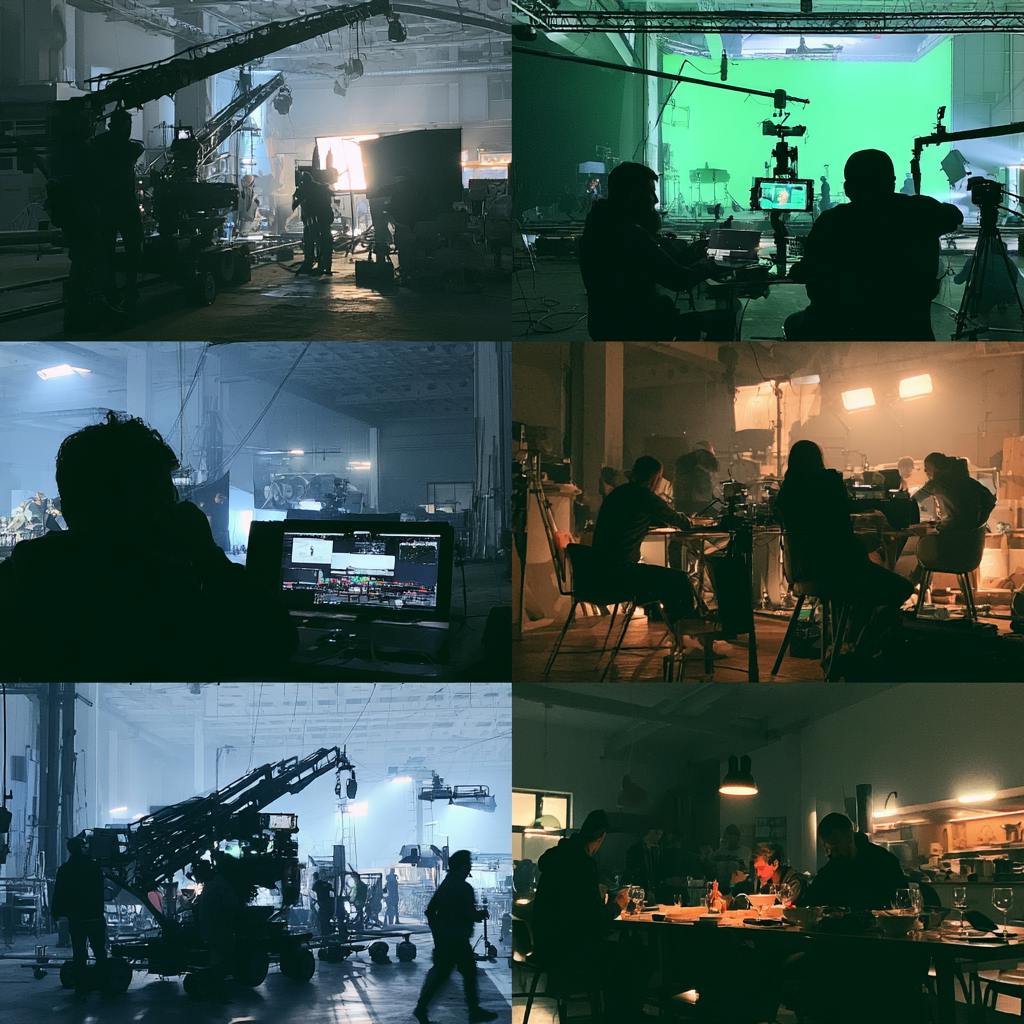
The director roster is equally central to the execution quality. Because different storytelling techniques demand genuinely different directorial skills — the visual metaphor system requires a director with deep fluency in cinematographic psychology (Kess Broekman-Dattner for BetterHelp); the transformation arc requires a director whose strength is non-verbal emotional architecture (Evan Ari Kelman for Douglas Elliman); the tension-first comedy requires a director with precision timing and celebrity management experience (Johan T Anderson for AirAlo) — the ability to match the technique to the director whose specific capabilities best serve it is a direct creative multiplier.
Building Lasting Brand Equity: The Compound Effect of Consistent Storytelling
The seven techniques are conversion tools. They are also, deployed consistently over time, brand equity builders — and the distinction matters for how marketing organizations should think about their video investment.
A single campaign that executes these techniques brilliantly creates a peak of brand visibility and audience engagement. A sustained program of brand storytelling video that returns to the same techniques, the same narrative universe, and the same emotional territory across multiple campaigns creates something qualitatively different: a cumulative body of work that defines how audiences understand and feel about the brand.
AirAlo's Bill Shock and Sick SIM campaigns aren't just two successful campaigns. They are the beginning of a brand narrative universe — a world in which travelers always face the threat of financial ambush, and AirAlo is always the solution, expressed through a different comedic lens each time. Each new campaign deepens the audience's relationship with the brand's storytelling world, builds a larger library of content that continues to circulate and generate views, and makes the next campaign more efficient because it arrives to an audience that already knows and has chosen to enjoy this brand's way of telling stories.
That is the compound effect of brand storytelling video: not a campaign result but a brand position. Not a quarterly metric but a durable competitive advantage. Not a content calendar item but an ongoing relationship between a brand's narrative intelligence and the audience that has chosen to live inside it.
The brands building that position now — the ones investing in the techniques, the partners, and the sustained commitment to storytelling over interruption — are the ones that will own their categories when the attention economy finishes its work of sorting the brands that earned their audiences from the brands that merely bought them.

Conclusion: The Technique Is the Strategy
The seven techniques in this guide are not production tools. They are strategic choices — decisions about how a brand will relate to its audience, what kind of emotional investment it is willing to make, and what kind of long-term equity it intends to build.
The tension-first framework is a decision to trust the audience's intelligence enough to let them feel the problem before you offer the solution. The visual metaphor system is a decision to spend production resources on making the invisible visible rather than the obvious more polished. The transformation arc is a decision to make the audience the hero rather than the product. The authentic alignment casting strategy is a decision to earn trust through genuine fit rather than borrow it through recognition. Genre transplantation is a decision to work with the audience's existing emotional vocabulary rather than against it. The earned resolution is a decision to make the brand's appearance the answer to a question the story has been building toward. The ecosystem story architecture is a decision to treat the audience relationship as a universe to inhabit rather than a transaction to complete.
Together, they constitute a way of thinking about brand video that is fundamentally oriented toward the audience rather than the brand — toward earning attention rather than buying it, toward building relationships rather than completing transactions, toward lasting equity rather than campaign spikes.
That orientation is what converts. Not in the narrow sense of driving a click to a landing page — though it does that too. In the full sense of converting a stranger into a viewer, a viewer into a fan, a fan into a customer, and a customer into an advocate who does the storytelling work for the brand in every conversation they have about the category.
That kind of conversion doesn't show up in the first month's analytics dashboard. It shows up in the brand's market position five years from now. And the brands that understand the difference are the ones worth watching — and worth learning from.