What Is Branded Video Content? The Ultimate Guide For Creators
Branded Video Content: What? Why? How?
The Comprehensive Guide for Modern Businesses
Director
Wild / Factory
Year
2026
Director
Wild / Factory
Year
2026
Type
How-to Guide
Industry
Advertising, Marketing, Filmmaking

Video Content Marketing Strategy Guide
Branded video content is video created by or on behalf of a brand that uses storytelling, entertainment, education, or audience value to earn attention before it asks for a commercial response.
Something changed in the relationship between brands and audiences, and most brands missed the exact moment it happened. There was no announcement, no industry report, no single campaign that marked the turn. But somewhere in the mid-2010s, accelerated by the rise of social media, the proliferation of streaming, the death of the captive television audience, and the emergence of a generation of consumers who had grown up with a skip button, the fundamental contract between advertiser and viewer was rewritten.
The old contract read: we will give you entertainment, and you will tolerate our advertising in exchange. The new contract reads: earn my attention or lose it, because I have never had more choices about what to watch and I will exercise every one of them.
Branded video content is the industry's answer to the new contract. Not an evolution of traditional advertising, but a genuine departure from it, one that demands different thinking, different craft, different metrics, and a fundamentally different understanding of what a brand is trying to accomplish when it puts a camera in front of a story.
This guide explains what branded video content actually is, how it differs from traditional advertising at every structural level, why it has become indispensable for businesses that want to build genuine audience relationships, and how the brands producing the most effective branded video in the market today approach its creation, from the first strategic question through the final delivered asset.



Part One: Defining Branded Video Content
What It Is and What It Is Not
Branded video content is video created by or on behalf of a brand that leads with storytelling value rather than explicit selling intent. Its primary purpose is to create an emotional, informational, or entertainment experience for the audience, one that builds positive associations with the brand, rather than to directly solicit a purchase.
This definition matters because it separates branded video content from several adjacent categories that are sometimes confused with it:
It is not a television commercial. A TV commercial is structured around a persuasion model: here is a product, here is its benefit, here is why you should buy it, here is where to get it. The audience knows it is being sold to from the first frame. The transaction is transparent. Branded video content, by contrast, earns its place in the audience's attention by offering something of value, such as entertainment, emotion, education, or community, before it makes any commercial claim.
It is not a product video or demo. Product videos explain how something works. Branded content explains why it matters. The distinction is the difference between a technical specification and a story.
It is not a brand film in the old sense. The heritage "brand film", the long-form, cinematic, usually awards-bait production that ran at Cannes and never quite found its audience, was the right instinct applied with too little distribution strategy and too much self-congratulation. Modern branded video content is not a film made to win awards. It is content made to connect with people, across the channels and formats where those people actually are.
It is not content marketing in the narrow sense. Content marketing is a strategy; branded video content is a format and approach within that strategy. All branded video content can serve a content marketing purpose, but not all content marketing is video, and not all video is branded content in the truest sense of the term.
What branded video content actually is can be understood through three defining characteristics:
1. It offers value independent of the commercial message. A viewer who watches a great piece of branded video content and never buys the product should still feel the experience was worth their time. The value the content provides, whether that is laughter, insight, emotional recognition, education, or simple beauty, is genuine, not instrumental.
2. It communicates the brand's identity, values, or worldview through the form of the content, not just through explicit messaging. The way the story is told, the characters it centers, the aesthetic choices it makes, the human truths it acknowledges, these are as much an expression of the brand as any tagline or logo. The best branded video content tells you everything about what a brand stands for without once reading a mission statement aloud.
3. It is designed to build a relationship over time, not to complete a transaction in a single exposure. The goal of branded video content is not to convert the viewer in the moment of viewing. It is to earn a place in the viewer's understanding of the world, to become part of the fabric of references, associations, and feelings that shape their eventual decision-making. That relationship-building is cumulative, and it requires consistency, authenticity, and a long view that traditional advertising rarely takes.

Part Two: How Branded Video Content Differs from Traditional Advertising
The Six Structural Differences
The distinction between branded video content and traditional advertising is not merely aesthetic; it is structural. The two approaches are built on different premises, pursue different goals through different mechanisms, and are evaluated against different measures of success. Understanding these structural differences is essential for any brand trying to decide how to allocate its video investment.
Difference 1: Interruption vs. Invitation
Traditional advertising is built on the interruption model. A television commercial interrupts the show. A pre-roll ad interrupts the YouTube video. A display ad interrupts the webpage. The audience has not asked to see the advertising; it has been inserted into a media context they came to for something else, and their tolerance of it is the price they pay for the content they actually wanted.
Branded video content is built on the invitation model. The audience encounters it, in their feed, on a brand's channel, through a friend's share, and chooses to engage with it because it appears to offer something worth watching. The relationship begins as a voluntary act, which fundamentally changes the emotional dynamic between the brand and the viewer. An audience that chose to watch something is in a different psychological state from an audience that was forced to sit through it. Their receptivity, emotional engagement, and memory of what they watched can all be stronger.
This is not an abstract distinction. In a world where streaming audiences can skip ads and social media users can scroll past content within seconds, the interruption model is becoming a progressively more expensive way to reach progressively smaller audiences. The invitation model, content that earns its audience, is the structural response to that reality.
Difference 2: Product-Forward vs. Story-Forward
Traditional advertising is organized around the product. The product's existence, its features, its benefits, its price, its availability, these are the information the advertising exists to communicate, and everything else is in service of that communication.
Branded video content is organized around the story. The story's emotional truth, its human recognizability, its capacity to generate feeling, these are the content's primary purpose, and the brand's presence within the story emerges organically from the relationship between the story and the brand's values rather than being the explicit subject of the communication.
The AirAlo "Bill Shock" campaign produced by Wild / Factory illustrates this distinction at its most vivid. AirAlo could have produced a traditional advertisement that explained eSIM technology, listed its features, and directed viewers to download the app. Instead, they produced a comedy campaign that personified the pain of roaming fees, the human emotional experience that the product solves, as a character who crashes vacations at the worst possible moment. The product's existence was made necessary by the story; the story was not built to serve the product's feature list.
The result was content that generated roughly 20 million organic YouTube views in its first month. That kind of organic response is difficult to achieve with a purely product-forward advertising approach, because audiences are more likely to share stories that made them feel something than information they received involuntarily.
Difference 3: One-Way Message vs. Two-Way Relationship
Traditional advertising is a broadcast model. The brand has a message; the audience receives it. The communication flows in one direction: from brand to consumer. The consumer's role is to receive, remember, and ideally act on what they have been told.
Branded video content is a relational model. The brand and the audience are in a dynamic exchange. The brand creates content that invites response, and the audience's responses, shares, comments, saves, repeat viewings, organic amplification, are not just metrics but communications. When an audience member shares a piece of branded video content with three friends before their international trip because it made them laugh and made them think about their phone plan, they are not just extending the reach of the campaign, they are actively participating in the brand's story and endorsing it to their personal networks.
This two-way dynamic is what makes branded video content so powerful for relationship-building. The audience doesn't just receive the brand's message; they become part of the brand's narrative by choosing to engage with and amplify it. That participation creates a qualitatively different kind of brand relationship than the one formed through repeated exposure to advertising.
Difference 4: Campaign Horizon vs. Evergreen Horizon
Traditional advertising operates on a campaign horizon. A campaign runs for a defined period, six weeks, a quarter, a season, and then it ends. The awareness it built, the associations it created, and the purchase intent it generated begin to decay from the moment the media spend stops. The investment has a use-by date.
Branded video content, at its best, operates on an evergreen horizon. Content that is genuinely valuable, genuinely funny, genuinely moving, genuinely illuminating, continues to circulate, be discovered, and be shared long after it was first released. The Blockchain.com "Don't Get Held Up" campaign starring William Shatner, produced by Wild / Factory, earned 356,350 unique new YouTube followers at launch, an owned audience that continued to receive brand communications long after the campaign's initial media run. That following is a durable asset, not a campaign artifact.
This evergreen quality also changes the economics of video investment. A traditional advertising campaign's cost is amortized over a defined media window. A great piece of branded video content continues to generate impressions, engagements, and brand value long after the initial production cost has been fully absorbed, which means its effective cost per impact continues to decline over time.
Difference 5: Claimed Identity vs. Demonstrated Identity
Traditional advertising tells the audience who the brand is. "We are innovative." "We care about our customers." "We believe in quality." These claims are asserted by the brand, which means the audience must decide whether to believe them, and in an era of widespread consumer skepticism toward advertising claims, they frequently don't.
Branded video content shows the audience who the brand is. The choices made in the creation of the content, what stories to tell, whose experiences to center, what aesthetic sensibility to express, what emotional register to inhabit, what cultural moments to acknowledge, are demonstrations of identity rather than assertions of it. An audience that watches the BetterHelp "Fragment" and "Better Angle" campaigns, produced by Wild / Factory, doesn't need to be told that BetterHelp is a company that takes the human experience of mental health seriously and approaches it with craft, care, and emotional intelligence. The content demonstrates it, frame by frame.
This is a more powerful form of brand communication because demonstrated identity is far more credible than claimed identity. Brands that show rather than tell create stronger, more durable brand associations and are far more resistant to competitive attack because those associations are felt rather than merely cognized.
Difference 6: Impression Economy vs. Attention Economy
Traditional advertising operates in the impression economy: the goal is to reach as many people as possible, as frequently as possible, with the brand's message. Success is measured in gross rating points, reach, frequency, and share of voice, metrics that count exposures, not engagements.
Branded video content operates in the attention economy: the goal is to earn genuine, voluntary, sustained attention from the right people. An audience of ten million people who chose to watch a full three-minute brand film and shared it with their networks is more valuable, in terms of brand impact, relationship building, and downstream purchase behavior, than an audience of fifty million people who had a 30-second spot forced in front of them while they were reaching for their phone to skip it.
This shift from impression counting to attention earning is not just philosophical; it has real implications for how brands measure success, how they structure their production investments, and how they think about what a great piece of branded video content actually looks like.
Part Three: The Spectrum of Branded Video Content
Understanding the Full Range of Formats and Applications
Branded video content is not a single format. It is an approach, a commitment to leading with storytelling value, that can be applied across a remarkably wide spectrum of video types, lengths, and distribution contexts. Understanding the full spectrum is essential for brands building a comprehensive video content strategy.
Brand Films and Hero Content
At the top of the content pyramid are brand films: longer-form cinematic productions, typically 90 seconds to several minutes, that express the brand's core identity, values, or worldview through a sustained narrative or visual experience. These are the flagship pieces of branded video, the content that establishes the emotional and aesthetic register for everything else the brand produces.
Brand films are not made to run as pre-roll ads. They are made to live on brand channels, to be shared by audiences who genuinely want to share them, to earn editorial coverage, and to serve as the creative foundation from which all other brand video content flows. The Douglas Elliman "Elevate Your Style" campaign, produced by Wild / Factory with director Evan Ari Kelman, exemplifies this format: a cinematic, non-verbal brand film that communicates Douglas Elliman's understanding of luxury real estate not through any explicit claim but through the precise visual language of the film itself, the architecture, the light, the performance, the music, the moment a door opens on something better than what came before.
Campaign-Led Branded Content
The most common form of branded video content is the campaign-led production: a set of related videos built around a single creative concept, designed to be distributed across multiple channels and formats simultaneously. These campaigns typically include a hero spot, social cutdowns at various lengths, platform-native formats, and ancillary content like behind-the-scenes footage, extended character moments, and platform-specific extensions.
The AirAlo Bill Shock campaign, three hero commercials, vertical social cuts, behind-the-scenes content, character micro-moments, and a documentary PSA, is the model of this approach executed with full creative and strategic intent. Every asset in the ecosystem is part of a single story; every format is designed for the specific platform and audience context where it will live; the whole is greater than the sum of its parts.
Documentary and Reality-Anchored Content
Some of the most effective branded video content is documentary in form: real people, real stories, real experiences that happen to illuminate the brand's values or demonstrate its impact. This format has particular power in categories where authenticity is paramount, including healthcare, social causes, and community-focused brands, because the documentary approach is structurally resistant to the "advertising" read that audiences reflexively apply to scripted content.
The AirAlo "Florida Man" PSA, a documentary short featuring Rene Remund, the real person whose $143,000 post-travel roaming bill inspired the Bill Shock campaign, is a masterclass in this format. Produced as a standalone piece with Wild / Factory's full production services, it grounds the campaign's comedic exaggeration in a real human experience, creating a truth anchor that gives the entire campaign more emotional weight and credibility. Rene is shown at home, going about his life, talking about what happened to him. The brand is the solution to his real problem. No character, no script, no manufactured drama, just a man and his story.
Branded Entertainment and Serialized Content
As the distinction between advertising and entertainment continues to blur, some brands are producing content that functions as genuine entertainment programming: serialized formats, recurring characters, episodic structures that give audiences a reason to return. The Bonobos "Decades of Drip" series with Justin Rose, produced by Wild / Factory for CBS Sports, is an example of this format: a branded series built around a simple, repeatable mechanism, Rose cycling through golf looks from different eras, that could sustain multiple episodes, multiple product updates, and a sustained presence in the golf culture conversation without ever losing its entertainment value.
Serialized branded content builds relationship equity that one-off campaigns cannot. Audiences who follow a series develop an ongoing relationship with the brand's content persona, and each new installment deepens the brand connection rather than starting from zero.
Social-Native and Short-Form Content
At the other end of the spectrum from the long-form brand film is social-native short-form content: videos of 15, 30, or 60 seconds designed specifically for the feed environment of Instagram, TikTok, YouTube Shorts, or LinkedIn. This content does not adapt from a longer format; it is conceived and executed for its specific distribution context from the first frame of the brief.
Social-native branded content operates under different creative constraints than any other form. The hook must land in the first one to two seconds. The story must be comprehensible without sound. The format must fill a vertical 9:16 frame. The content must feel native to the feed rather than imported from broadcast. And the brand's presence must be embedded in the content's value rather than appended to it as a logo and tagline at the end.
These constraints are not limitations. They are a creative discipline that, when embraced rather than resisted, produces content with a directness and efficiency that longer formats cannot achieve. Wild / Factory's production model explicitly builds social-native formats into every campaign brief from the pre-production planning stage, treating them as distinct creative challenges rather than as afterthoughts to be addressed in post.
Testimonial, Customer Story, and Community Content
Testimonials and customer stories are one of the oldest formats in advertising and, in video form, one of the most persistently effective. The reason is simple: an audience's natural skepticism toward brand claims dissolves when a real person who is not on the brand's payroll shares a genuine experience.
The most effective testimonial content in modern branded video is not the stilted, obviously scripted "I love this product because it does X, Y, and Z" format that dominated television advertising for decades. It is the documentary-style capture of genuine experience: real people filmed with the visual quality and production craft of narrative content, sharing real stories in their own words, in their own environments, in response to real questions that allow them to express the full texture of their experience.
The skill involved in producing this format is the same skill required for documentary filmmaking: creating the conditions in which genuine expression can occur, and then capturing it with the craft and intentionality that makes it watchable. It requires directors who can build trust with non-professional subjects, crews that are small and unobtrusive enough to allow authentic moments to emerge, and post-production editors who can find the story within the material.

Part Four: Why Branded Video Content Is Essential for Modern Businesses
The Case Across Every Scale and Category
The argument for branded video content as an essential business tool is not one argument; it is a convergence of several independent forces that together make its adoption a strategic imperative rather than a creative preference.
The Attention Economics Argument
The most direct argument is also the most practical. Modern audiences have more control over their media consumption than at any point in the history of advertising. They can skip, scroll, block, mute, and switch away from any piece of content that does not earn their continued engagement. In this environment, the only reliable path to sustained audience attention is content that people genuinely want to watch, content that offers enough value that the audience chooses to give it their time rather than having that time taken from them.
Branded video content is particularly well suited to earning that voluntary attention at scale. Video can combine motion, sound, performance, information, and emotion in a single experience, giving brands multiple ways to hold attention and build recall. When that video is built around genuine storytelling value, as the best branded video content is, the engagement advantage comes from authentic viewer interest rather than forced exposure.
The Trust Economics Argument
The second major argument is about trust. Modern consumers are increasingly skeptical of direct advertising claims and often look for social proof, peer recommendation, reviews, and other evidence before making purchase decisions. That makes credibility, relevance, and demonstrated understanding of the audience more important than simply repeating a persuasive claim.
Branded video content addresses the trust deficit by changing the nature of the brand communication. Instead of asserting claims that consumers must decide whether to believe, it creates experiences that communicate brand identity through demonstration rather than declaration. A brand that makes a genuinely funny campaign, like AirAlo's Bill Shock or Blockchain.com's "Don't Get Held Up", earns trust not through the quality of its claims but through the quality of its creative judgment. The audience's response is not "I believe what they're telling me about this product" but "I like how these people think about things, and I feel good about this brand", which is a more durable and more commercially significant form of trust.
The Algorithm Economics Argument
A third argument is structural and increasingly urgent: major digital platforms are heavily organized around video, and their recommendation systems respond to engagement signals such as watch time, completion, shares, comments, and repeat viewing. YouTube, Instagram, TikTok, LinkedIn, and Facebook all provide substantial environments for video discovery, particularly short-form video. Brands that produce high-quality branded video content are therefore better positioned to work with current viewing behavior across these platforms.
This platform advantage is not just about organic reach, though that matters. It can also affect paid-media performance because delivery systems optimize around predicted user response, campaign objectives, and creative performance. Content that holds attention and generates meaningful response gives the media strategy stronger creative signals to work with.
The Brand Differentiation Argument
In most categories, the products are more similar than the brands want to admit. Feature parity is the norm, not the exception. The factors that actually drive consumer preference, emotional association, identity alignment, perceived values fit, are generated not by product differentiation but by brand differentiation. And brand differentiation, at scale, is built through storytelling.
The Bonobos x Justin Rose campaign is a clear example in recent American branded content of this principle at work. In a golf apparel market where every major player can credibly claim technical performance, the brand that wins is the one that owns the cultural conversation about where golf style is heading. The Wild / Factory campaign gave Bonobos a cultural position, as the brand that understands and celebrates the evolution of golf as a style category, that no product spec sheet or feature comparison could have established.
The Relationship Longevity Argument
Perhaps the most strategically significant argument for branded video content is the one that is hardest to capture in a quarterly marketing dashboard: the long-term value of genuine audience relationships built through great content.
Audiences that have been entertained by a brand, moved by a brand, educated by a brand, or made to feel understood by a brand become advocates for that brand in ways that audiences exposed to traditional advertising do not. They share the brand's content. They defend the brand in social contexts where it is being criticized. They choose the brand again and again in their purchase decisions not because they remember a feature claim but because they have a felt relationship with it.
The BetterHelp campaigns produced by Wild / Factory serve five million people worldwide. That scale of impact is possible, in part, because the brand's video content communicates that BetterHelp understands the human experience of mental health with genuine depth and care, not through claims about its platform's features, but through content that demonstrates that understanding in every creative choice. The people served by BetterHelp are not customers who were persuaded by an advertising claim. They are people who felt understood by a brand's content and chose to trust it with something deeply personal as a result.

Part Five: The Principles of Effective Branded Video Content
What Separates Remarkable from Forgettable
Understanding what branded video content is and why it matters is the foundation. Understanding what makes it actually work, what distinguishes the content that builds genuine audience relationships from the content that spends its budget and disappears, is the practical core.
Principle 1: One True Insight, Deeply Held
The most reliably differentiating characteristic of branded video content that earns lasting audience engagement is the specificity and truth of its central insight. Not a positioning statement. Not a brand promise. An insight: a genuinely observed, specifically named human truth that the audience recognizes as real the moment they encounter it.
"Bill shock feels like an uninvited guest ruining your vacation" is an insight. "Our eSIM technology gives travelers peace of mind" is a brand promise. The former generates 20 million organic views. The latter generates polite disengagement.
The pathway to a real insight is not brainstorming sessions and whiteboard frameworks; it is genuine curiosity about the audience's experience. What do they actually feel in the moments where the brand is relevant? What do they silently dread, quietly hope for, or loudly complain about? What is the gap between how things are and how they wish they were? That gap is where insights live. And insights, once found, don't need to be sold to an audience, they are recognized.
Principle 2: Authenticity Over Aspiration
Branded video content fails most often not because it is poorly made but because it is insufficiently true. It shows a version of the brand, aspirational, polished, aspirationally diverse, aesthetically correct, that no one who works at the company would fully recognize, and that no customer would fully believe. The content communicates that the brand is performing identity rather than expressing it.
Authenticity in branded video content is not about lo-fi production values or confessional storytelling, though these can be powerful tools when genuinely appropriate. It is about the brand's genuine values, genuine perspective, and genuine sense of humor, or lack of it, being consistently present in every creative choice. A brand that is genuinely funny should be funny. A brand that is genuinely serious about something should be genuinely serious about that thing. A brand whose customers share a genuine community or shared experience should center that community and that experience in its content.
Wild / Factory's approach to celebrity casting reflects this principle with particular precision. Justin Rose worked for Bonobos because Rose genuinely wore the brand, co-designed collections with them, and spoke authentically about the brand's impact on how he approached style. William Shatner worked for Blockchain.com because Shatner had genuine, pre-existing involvement in blockchain ventures and spoke from real conviction about cryptocurrency. In both cases, authenticity was not a creative decision, it was a strategic prerequisite. Content built on authentic talent alignment is generally more credible than content built on borrowed fame.
Principle 3: Format Serves the Story
The most common production mistake in branded video content is approaching format as a decision that comes after the creative: "we've made our hero spot, now let's figure out the social versions." This approach treats format as a technical consideration rather than a creative one, and it consistently produces content that feels native to one platform and uncomfortable on all the others.
The right approach is to design for the full content ecosystem from the first moment of pre-production. Each format, the hero brand film, the 30-second campaign spot, the 15-second social hook, the 9:16 vertical cut, the 6-second pre-roll, the behind-the-scenes series, has its own specific creative demands, its own relationship to audience attention, its own role in the broader content strategy. Content that is designed for each format from the brief stage is better positioned to perform naturally across platforms than content that is adapted after the fact.
As Wild / Factory's production model demonstrates across multiple campaigns, this ecosystem approach is not a post-production workflow; it is a pre-production architectural decision. The production schedule, the shot list, the script structure, and the performance direction on set all must be planned with the full format library in mind from the beginning.
Principle 4: The Brand as Host, Not Subject
One of the most important conceptual shifts in branded video content is the reframing of the brand's role in the story. In traditional advertising, the brand is the subject, the commercial is about the product. In the most effective branded video content, the brand is the host, the entity that has created a space for this story to exist, and whose values are demonstrated by the nature of the story it chose to tell.
The difference sounds subtle but is operationally significant. A brand that sees itself as the subject of its video content will tend to center itself, its features, its achievements, and its claims. A brand that sees itself as a host will tend to center its audience, their experiences, their tensions, their pleasures, their worldview, and build content that those people will feel is genuinely for them.
BetterHelp's "Fragment" campaign does not center BetterHelp. It centers the experience of a person whose thoughts have multiplied beyond their capacity to manage them alone. BetterHelp's role is to create the conditions in which that person's experience can be witnessed with dignity, craft, and emotional truth, and to be present as the solution when the story arrives at its turning point. The brand is the host of the story, not the subject of it. And the result is content that serves five million people because it made them feel understood rather than persuaded.
Principle 5: Production Craft as Brand Signal
In branded video content, production quality is not a luxury; it is a brand signal. The level of craft invested in a piece of content communicates something about how much the brand values its audience's attention and experience. Content that looks and sounds cheap tells the audience that the brand didn't consider their time worth a significant investment. Content produced with genuine care, in the casting, the visual language, the sound design, the editing rhythm, tells the audience that this brand takes its relationship with them seriously.
This does not mean that all branded video content requires large budgets. The most important signal is not the size of the crew but the quality of the creative thinking and the intentionality of every production decision. A documentary-style customer story shot with a single camera and a skilled DP can communicate brand care and quality as powerfully as a full campaign production, if the thinking is sharp and the execution is intentional.
What it does mean is that production decisions, director, cast, location, visual language, post-production approach, should be made with the same strategic rigor as any other brand decision, because they are brand decisions. They communicate the brand's identity, values, and quality standards as clearly as any messaging document ever could.

Part Six: How Full-Service Studios Bring Branded Video to Life
The Case for End-to-End Creative Partnership
The most effective branded video content is almost never the product of a fragmented production process, where the strategy is developed by one team, the creative concept by another, the production by a third, and the post-production by a fourth. Each handoff in that chain is an opportunity for the original insight to be diluted, the creative vision to be compromised, and the brand's unique identity to be replaced by whoever's aesthetic sensibility happens to be dominant at each stage.
The production companies and creative studios that consistently produce the highest-quality branded video content are the ones that maintain creative continuity from brief to delivery, where the same team that developed the insight also developed the concept, also produced the shoot, and also completed the post-production. That continuity is not a workflow preference. It is a creative necessity, because the insight that drives a great piece of branded video content must be present in every decision across every phase of the production.
This is the model that Wild / Factory has built around: "a full service video and content agency" that "delivers comprehensive video production services for brands and agencies nationwide" with a team that "handles every aspect of your project: concept development, scriptwriting, storyboarding, pre-visualization, production design, wardrobe, and art direction." That list is not a capabilities checklist; it is a description of the creative continuity that protects the brand's unique identity and the campaign's central insight across every phase of its realization.
Wild / Factory is headquartered in New York with production operations in Los Angeles, Montreal, and Mexico City, supporting commercial and branded content production across the United States, Canada, and Mexico.
Bespoke Strategy: Why One-Size-Fits-None
One of the most important characteristics of effective branded video production is the insistence on bespoke creative development, the recognition that every brand has a genuinely distinct identity, audience, and set of business challenges, and that the creative approach to each must be developed from those specificities rather than from a template.
The clients Wild / Factory serves span Pepsi and Google and HBO at one scale, AirAlo and Blockchain.com and BetterHelp at another, and the NYC Department of Education and the CDC at yet another, each with distinct audiences, distinct brand identities, distinct regulatory and cultural constraints, and distinct definitions of what a successful piece of branded video content looks like. The same creative methodology does not apply equally to all of them. The same visual language, the same tone, the same format architecture, the same measurement framework, none of these can be lifted from one client's brief and applied to another's without creative dilution.
Bespoke means starting from the client's specific business challenge, not from the agency's template. It means finding the insight that belongs to this brand and this audience, not the insight that worked for a similar brand in a similar category last year. It means choosing the director, the cast, the location, and the visual language for the specific creative requirements of this brief, not for the general aesthetic preferences of the agency's showreel.
Wild / Factory describes their process this way: "From a client's brief we develop a bespoke creative deck. Once approved, with our smooth pre-production process we turn the idea into reality." That bespoke development is where the creative investment is made, in the specificity, the insight, the strategic precision that transforms a brief into a campaign concept that belongs uniquely to the brand.
The Full Production Service Model: From Concept to Delivery
Understanding what a full-service production partner actually does across the lifecycle of a branded video project illuminates why end-to-end capability matters, and why the fragmented, multi-vendor approach consistently underdelivers relative to the integrated model.
Creative Development and Strategy
The production process begins not with a camera but with a question: what is the single most important thing this content needs to do for this audience? The answer to that question, the insight that will drive the creative concept, is the most valuable thing a production partner produces, and it requires the deepest investment of strategic and creative thinking. At Wild / Factory, this phase includes concept development, creative strategy, and the development of the bespoke creative deck that serves as the foundation for everything that follows.
Pre-Production
Pre-production is where the concept becomes a plan: a locked script, a fully visualized shot list, a cast that serves the creative, a location that does narrative work, a production design that communicates the brand's visual identity, and a production schedule that allows the creative vision to be realized within the budget and timeline. Wild / Factory's pre-production services include scriptwriting, storyboarding, pre-visualization, production design, wardrobe, art direction, location scouting and permitting, talent casting, and full crew management.
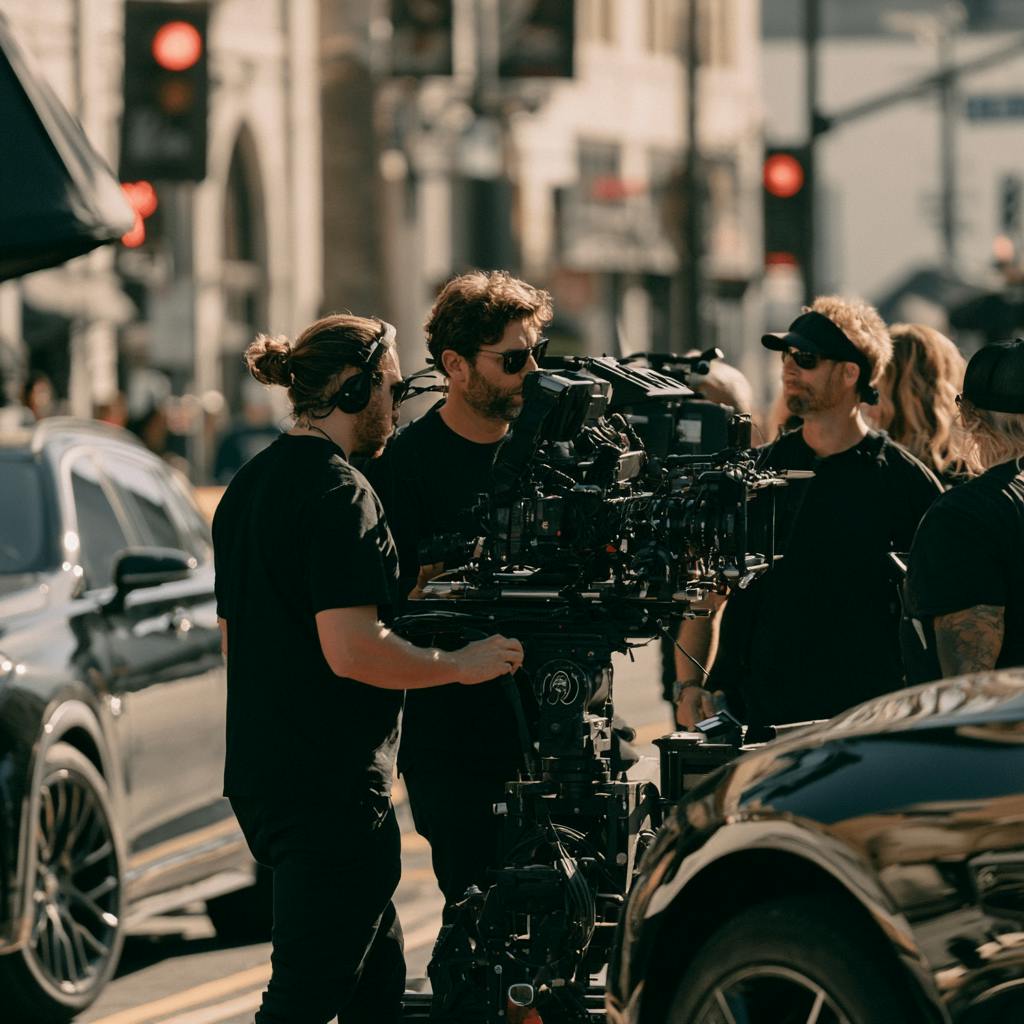
Production
The shoot is where the planning meets the world, where the concept is tested against reality, where great directors make the thousand small decisions that determine whether the footage is adequate or extraordinary, where the relationship between the brand and the production team is most visibly a creative partnership rather than a vendor relationship. Wild / Factory's production model, an award-winning director roster spanning Emmy, Telly, Grammy, Oscar-nominated, and Cannes Golden Lion talent, means that the creative quality of the production is not left to chance or to whoever happened to be available.
Post-Production
In-house post-production is the final act of creative authorship, where the footage becomes the story, where the color grade establishes the visual world, where the sound design creates the emotional environment, and where the full library of platform-optimized assets is built from the raw material of the shoot. Wild / Factory's post-production services include multi-camera editing, professional color grading, sound design and mixing, motion graphics and 2D/3D animation, VFX compositing, and format delivery across broadcast, social, web, and CTV specifications.
Media Strategy and Distribution
The most brilliant piece of branded video content generates no return if no one sees it. Wild / Factory's integrated approach extends beyond production to include media strategy, media buy, and placement, ensuring that the content reaches the right audiences on the right platforms at the right moments, with a distribution plan that maximizes both paid efficiency and earned organic amplification.
The Director Roster Advantage
One of the most distinctive features of Wild / Factory's model, and one that most directly benefits brands commissioning branded video content, is its director roster: a curated group of award-winning directors with diverse creative sensibilities, technical specializations, and areas of category expertise that can be matched precisely to each brand's brief.
The ability to choose the right director for a specific brief, rather than working with whoever the production company happens to have available, is a genuine creative advantage. A brief that requires the emotional precision and psychological depth of Kess Broekman-Dattner for a mental health campaign is not served by the same director who excels at the physical comedy timing of a celebrity consumer campaign. A brief that requires the cinematic architectural sensibility of Evan Ari Kelman for a luxury real estate brand is not served by a director whose strength is documentary authenticity.
The Wild / Factory roster, spanning comedy, drama, documentary, VFX-integrated animation, social-native content, celebrity management, and cross-disciplinary music video and narrative work, gives brands access to the full range of branded video creative capabilities through a single production partner. That access is the difference between matching the brief to the best possible director and working with the best available director, which is not always the same thing.

Part Seven: Building Your Branded Video Content Strategy
A Framework for Brands Starting from Scratch or Starting Over
Whether a brand is commissioning its first piece of branded video content or reassessing an existing video strategy that isn't delivering, the following framework provides a structured path from strategic clarity to creative production to distribution and measurement.
Step 1: Define What Relationship You Are Trying to Build
Before any creative brief is written, before any production partner is engaged, before any format or platform is discussed, a brand needs to answer a foundational question: what kind of relationship am I trying to build with my audience through this content?
This is not the same question as "what do I want people to do after watching?" (buy, subscribe, visit, recommend), though that matters too. It is a deeper question about the nature of the connection the brand is pursuing: do you want to be the brand that makes people laugh in a category that takes itself too seriously? The brand that takes a human experience seriously in a category that usually treats it abstractly? The brand that celebrates a community in a way that community hasn't been celebrated before? The brand that educates with genuine respect for the intelligence of its audience?
The answer to this question shapes every subsequent creative decision, the tone, the format, the casting, the visual language, the distribution strategy. Without it, all of those decisions are made in a vacuum, and the resulting content tends to look like everyone else's content in the category.
Step 2: Find the Insight That Belongs to Your Brand
The insight driving great branded video content cannot be borrowed from another brand's success. It must be found in the specific intersection of your brand's genuine identity and your audience's genuine experience.
The process of finding that insight requires real investigation: real conversations with real customers about their actual experiences in the category, honest internal conversations about what the brand genuinely believes and cares about, as distinct from what its positioning documents say it believes and cares about, and an honest analysis of the gap between what competitors are saying and what the audience actually wants to hear.
That gap, between the category conversation and the human truth that has been left out of it, is almost always where the most powerful branded video content insight lives.
Step 3: Choose the Format Architecture Before You Choose the Format
Modern branded video content is not a single piece; it is an architecture of related pieces, each designed for its specific distribution context, collectively building a coherent and cumulative brand story. Before committing to any specific format, define the full architecture:
What is the hero piece that anchors the brand's narrative?
What short-form pieces will carry that narrative into the feed environment?
What behind-the-scenes or ancillary content will build community around the campaign?
What platform-specific pieces are designed for each channel's unique audience behavior?
What evergreen content will continue to perform after the initial campaign window?
Designing this architecture before entering production ensures that the shoot captures everything needed for the full library and that the production budget generates maximum content volume per dollar invested.
Step 4: Find the Right Production Partner for Your Specific Brief
Not all production partners are equally capable of executing all briefs. The choice of production partner, and within that the choice of director, is one of the most consequential creative decisions in the entire process.
The questions to ask are not only "have you worked in our category before?" and "can I see your reel?" They are: "Do you understand the specific insight we're trying to dramatize? Can you show me work that demonstrates the specific creative capability this brief requires? Who, specifically, on your director roster is best matched to this brief, and why? What does your creative development process look like, and how do you ensure the insight survives from brief to production to delivery?"
Wild / Factory's approach to client engagement starts from this principle: every client receives a bespoke creative deck developed specifically for their brief, with a director recommendation that is matched to the specific creative requirements of the campaign. That specificity, treating each brief as a genuinely unique creative challenge rather than as an instance of a familiar template, is the foundation of production partnerships that produce genuinely differentiated branded video content.
Step 5: Measure Against the Relationship You Defined
The measurement framework for branded video content should be built from the relationship objective defined in Step 1, not from the generic metrics that happen to be available in the platform dashboards.
If the goal is to become the brand that makes people laugh in a category that takes itself too seriously, the primary success metric is not click-through rate. It is organic share rate, comment sentiment, completion rate on the hero content, and social following growth. If the goal is to be the brand that takes a human experience seriously in a category that usually treats it abstractly, the primary success metric is brand favorability lift, earned media coverage, and the depth of emotional engagement reflected in audience comments and social conversation.
The metric should match the intent. And the intent should match the relationship. Both should have been defined before the creative brief was written.
Frequently Asked Questions About Branded Video Content
What is branded video content?
Branded video content is video created by or for a brand that leads with storytelling, entertainment, education, or audience value rather than direct selling. Its purpose is to earn attention, communicate brand identity, and build a relationship with the audience.
How is branded video content different from traditional advertising?
Traditional advertising usually leads with the product, offer, or persuasive message. Branded video content leads with the story or audience experience and allows the brand's relevance to emerge through that experience.
What makes branded video content effective?
Effective branded video content starts with a clear audience insight, expresses the brand authentically, uses formats suited to the platforms where it will appear, and maintains creative continuity from strategy through production, post-production, and distribution.


Conclusion: Every Brand Has a Story Worth Telling — The Question Is How
Wild / Factory's operating philosophy is stated simply on their website: "every brand has a story worth telling, and how you tell it is everything." That second clause is the whole art.
The first clause, every brand has a story worth telling, is the democracy of branded video content. There is no category too boring, no product too utilitarian, no service too abstract to resist the transformation that genuine creative insight and honest storytelling can produce. AirAlo made roaming fees compelling. Blockchain.com made cryptocurrency relatable. BetterHelp made the invisible experience of anxiety cinematically visible. Douglas Elliman made a real estate broker feel like an invitation to a different life. None of those are naturally dramatic subjects. All of them became extraordinary branded video content in the hands of the right creative partners.
The second clause, how you tell it is everything, is the practice of branded video content. The insight that drives the story, the director who gives it visual form, the cast that gives it human truth, the format that gives it the right context and the right audience, the distribution strategy that puts it in front of the people it was made for, these are the variables that determine whether a brand's story becomes a piece of content people choose to watch, choose to share, and choose to remember.
That choice, on the part of the audience, is both the measure of success in branded video content and its defining characteristic. In a world that has given everyone a skip button, the highest achievement available to any brand is making content that people choose not to skip. That choice is earned. It is earned through truth, through craft, through care, through the sustained commitment to treating the audience's attention as the most valuable resource in the media economy rather than as a resource to be extracted.
The brands that have learned to earn that choice are the ones building the audience relationships that will define the next decade of business. The question is not whether branded video content matters. The question is when your brand will decide to make it matter.